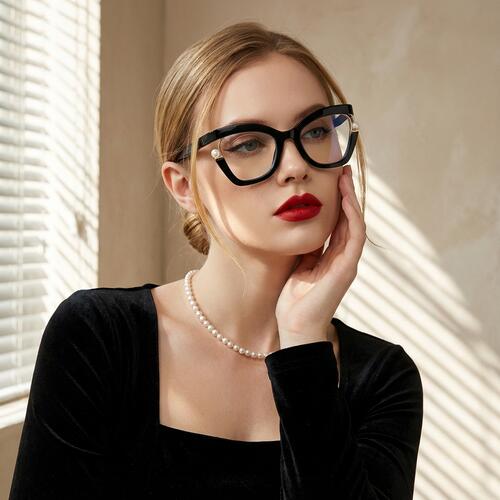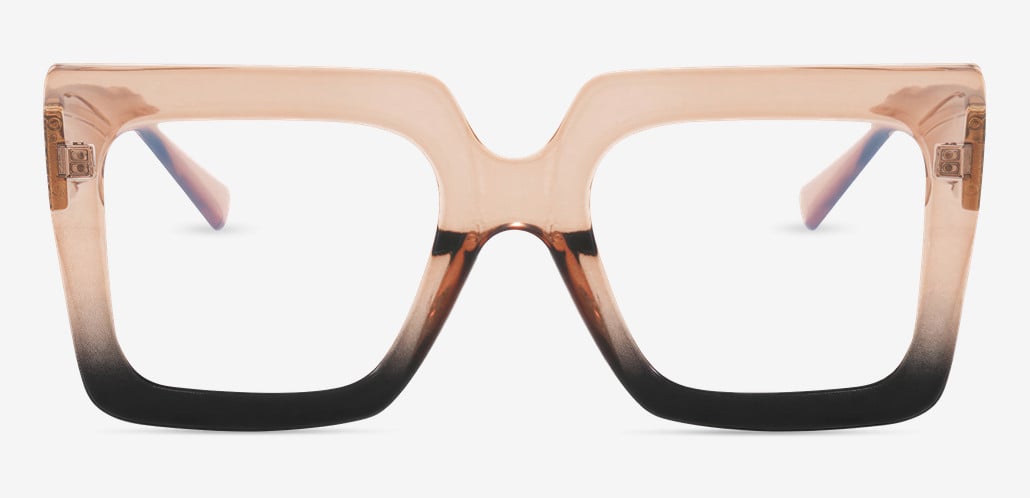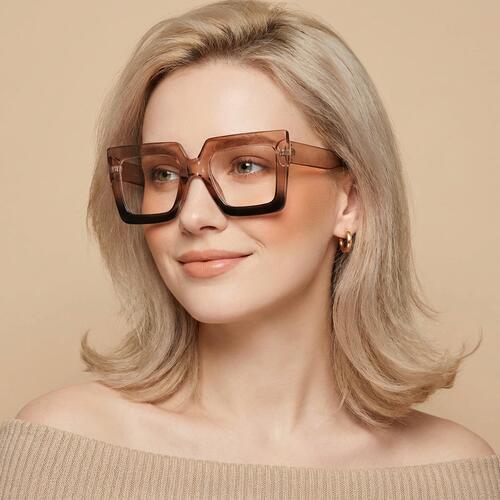

80s Glasses: Why They Got So Big, and the 1988 Fitting Rules That Still Work
The giant frames of the 1980s weren't only a fashion dare. Lighter lenses made them wearable, and the people fitting them followed a set of rules about bridges, temples and hair that most shoppers have never heard of. Here's how to use both.
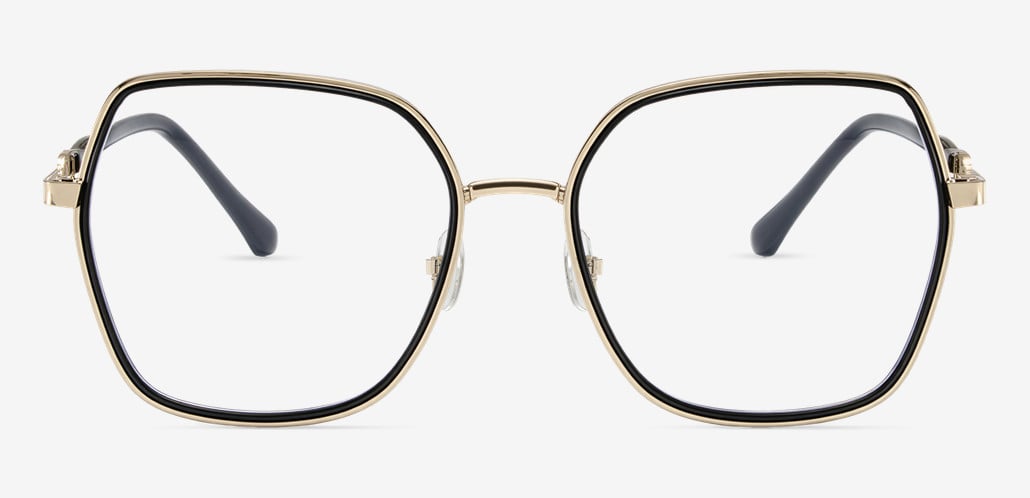
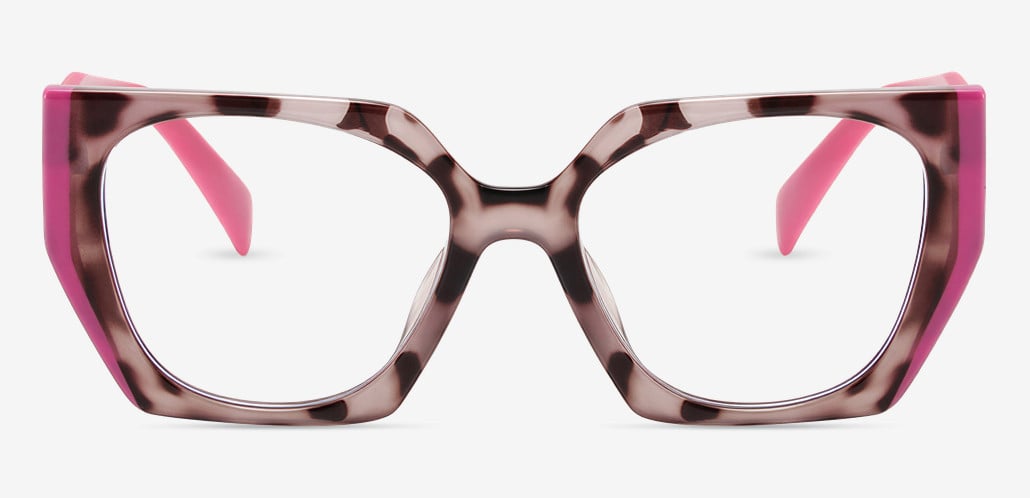
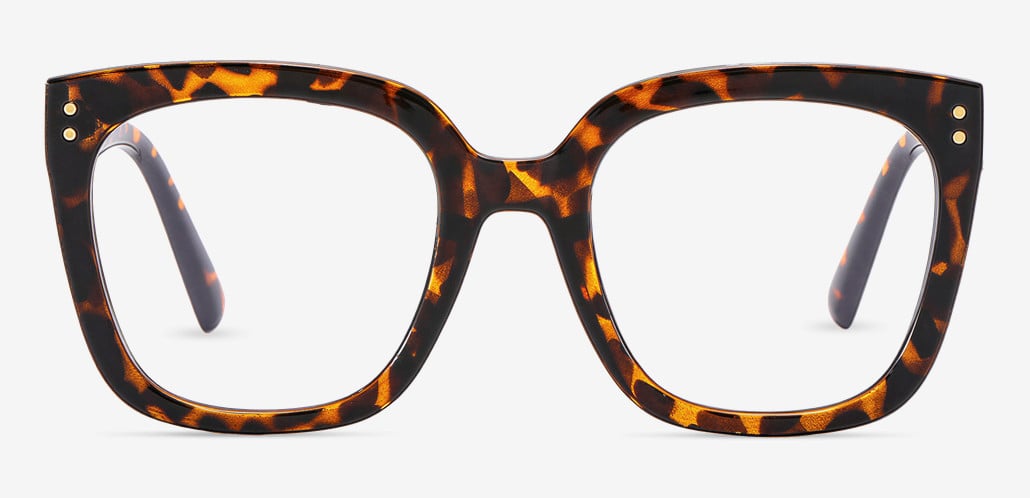
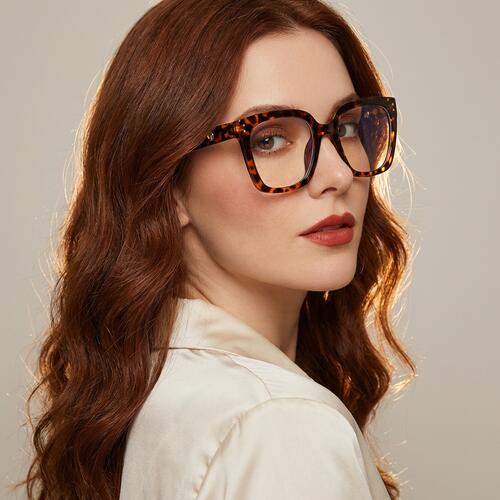
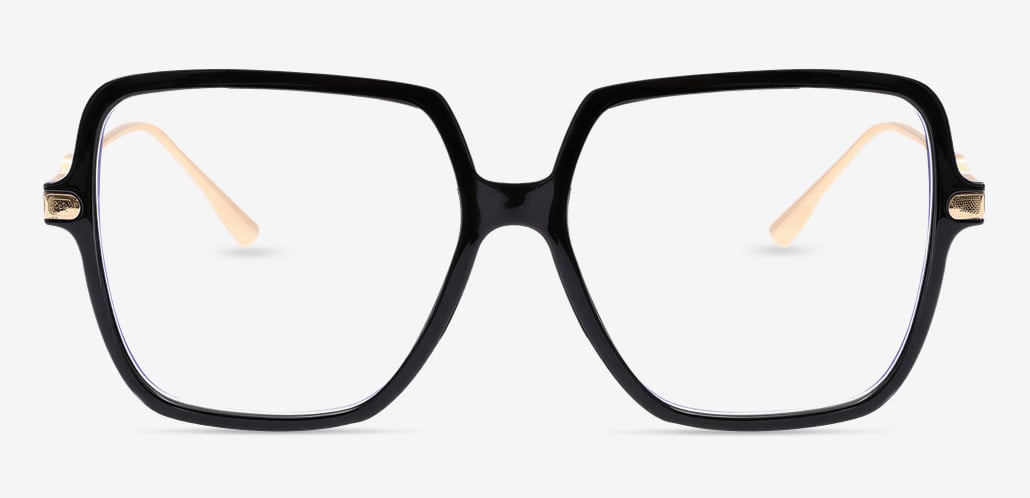
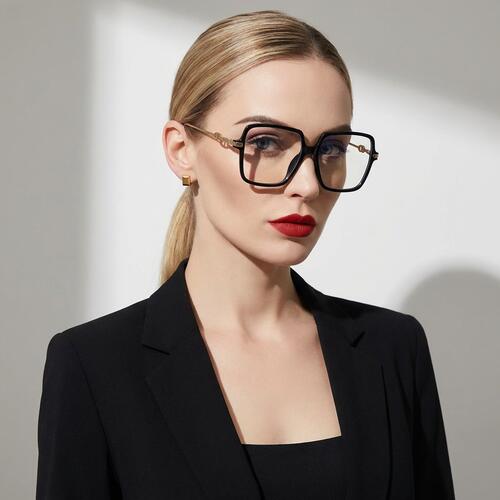
If you've been browsing 80s Glasses, you've probably noticed two things. The frames are bigger than almost anything else on your screen, and some pairs look effortlessly right while others look like part of a costume. Size alone doesn't explain the difference.
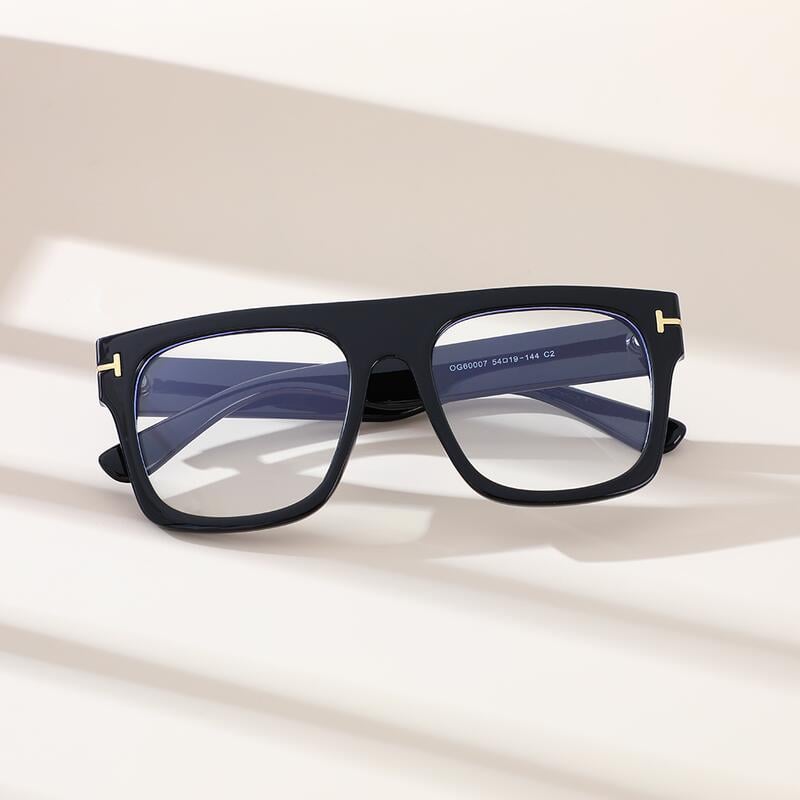
This guide does two jobs. First, it explains where the 80s scale actually came from, because the reason is more practical than "it was a bold decade." Second, it hands you the decade's own fitting logic, taken from a 1988 trade magazine, so you can read any frame before you order it.
Quick answers
- Why were 80s glasses so big?
- Plastic lenses weigh about half as much as glass lenses of the same size (1.32 vs 2.54 grams per cubic centimeter), and plastic became the everyday standard through the 1970s and 1980s. With lighter lenses, a large frame no longer meant a heavy load on the nose.
- Did all 80s glasses look the same?
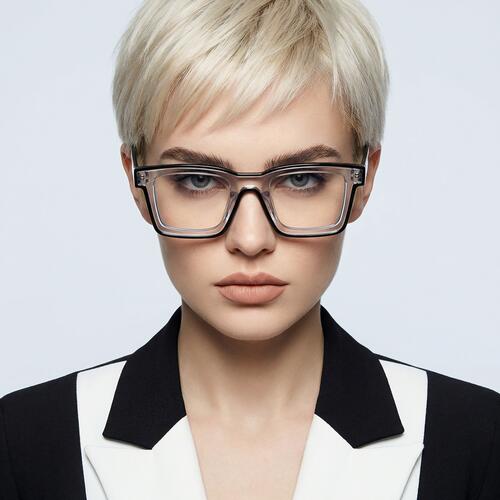
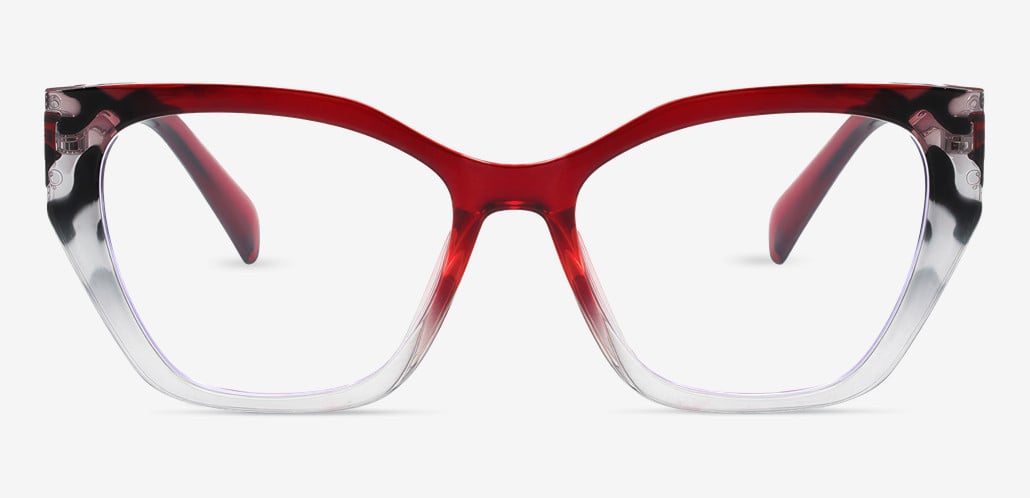
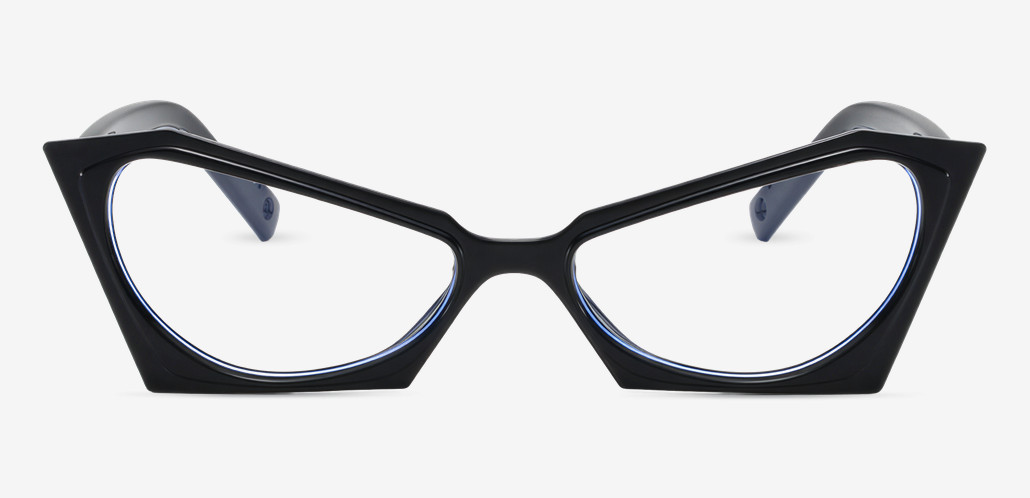
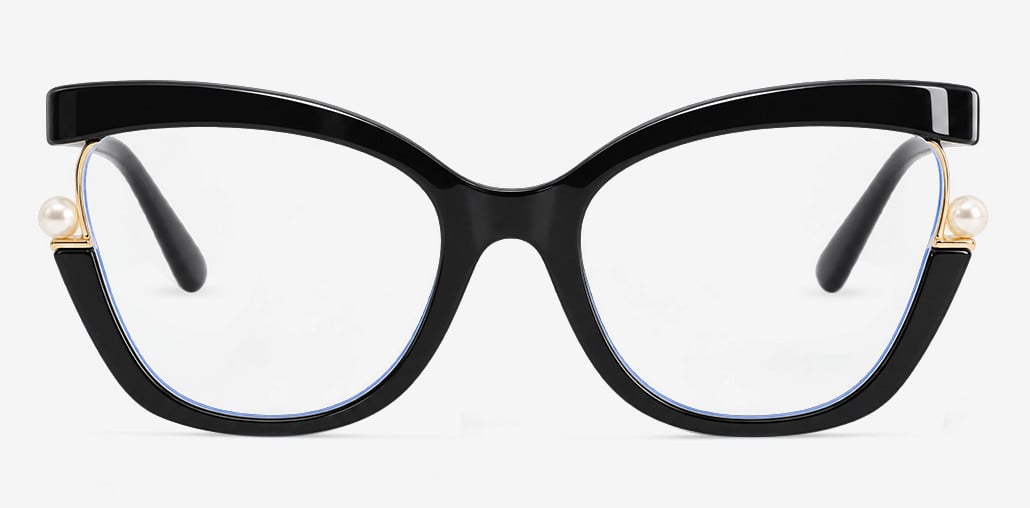
- No. Trade coverage of the decade describes large plastic frames with faceted fronts and jewel details early on, then small metal frames and tortoise gaining ground as the decade went on.
- How do you choose a pair now?
- Use the three dials fitters relied on in 1988: where the bridge sits, where the temples attach, and how much hair frames your face. The Junction Check below shows you how to read the first two from a product photo.
Why 80s glasses got so big: the weight gap
For most of the 20th century, eyeglass lenses were made from crown glass. Glass is optically excellent, but it's dense: one cubic centimeter weighs about 2.54 grams. CR-39, the plastic that replaced it for most wearers, weighs about 1.32 grams for the same volume. Put the two side by side in the same frame and the plastic lens weighs roughly half as much.

The change took decades, not a single season. The first CR-39 eyeglass lenses were made in the late 1940s, and by the mid-1970s CR-39 led the market. Glass held on in some corners, partly because early light-reactive lenses were glass. Polycarbonate prescription lenses, lighter still at about 1.20 grams per cubic centimeter, reached the market around 1980. By the mid-1990s, glass was a niche choice.
| Lens material | Weight per cm³ | Weight vs. glass | Where it stood in the 80s |
|---|---|---|---|
| Crown glass | 2.54 g | 100% | Losing ground, still used for some specialty lenses |
| CR-39 plastic | 1.32 g | About 52% | The market leader since the mid-1970s |
| Polycarbonate | 1.20 g | About 47% | New: prescription lenses from around 1980 |
Why this matters for frame size. A frame can only grow as far as the wearer's nose will put up with. Cut the weight of the heaviest part, the lenses, and a bigger frame stops feeling bigger. We can't prove that lens chemistry caused a fashion, but the timing lines up: the decade when lighter lenses became normal is the decade frames reached their largest.
The decade had two halves
"80s glasses" usually brings one image to mind, but the decade had two. A September 2011 retrospective in Eyecare Business, a trade magazine for the eyewear business, describes large plastic frames as the early-80s rage, along with faceted fronts, stone and jewel details, and modified P3 shapes (a softened round lens with a flatter top). As the decade went on, small metal frames gained popularity, and so did tortoise. Neon showed up in splashes throughout.
Then the pendulum swung hard. The same retrospective describes the 1990s as the age of rimless frames, skinny rectangles and slight circles, mostly in metal. That swing is useful to know when you shop: a small, light metal frame can be just as "80s" as an oversized plastic one, as long as it comes from the second half of the decade.

The 1988 Fitting Card: the decade's own rules
In January 1988, Eyecare Business ran a short box of face-fitting tips for the people who fit frames. The magazine reprinted it in its 2011 anniversary issue, and it reads like a control panel for big frames. Every tip turns one of three dials: the bridge, the temples (where the arms join the frame front), and the hair around the face.
Below, we've paraphrased each tip, explained the idea behind it, and added what to look for when you shop online.
Read these as period styling rules, not science. They were written for in-person fittings in 1988. They're a starting point you can test on your own face with virtual try-on, and you're free to break them.
Lower and darker to play down
The 1988 tipA thicker, darker bridge that sits lower on the nose was used to make a long nose or wide-set eyes less noticeable.
The ideaA strong, low horizontal line cuts the visible length of the nose and pulls attention toward the middle.
Check it onlineIn the front photo, is the bridge level with the middle of the lenses or lower? Is it the darkest part of the frame?
Higher and lighter to open up
The 1988 tipA high, thin, light-colored bridge was suggested for a small nose or close-set eyes. A narrower frame shape also helped close-set eyes look farther apart.
The ideaA light bridge almost disappears, so the space between the eyes reads wider.
Check it onlineLook for crystal, light-colored or thin metal bridges whose top edge sits near the top of the lenses.
The keyhole
The 1988 tipA wide keyhole bridge, an arch that rests on the sides of the nose, was recommended for a wider base of the nose.
The ideaThe open arch shows skin where a solid bridge would cover it, so the nose reads narrower.
Check it onlineZoom in above the nose pads. A keyhole looks like an upside-down U cut into the frame.
High and light to lengthen
The 1988 tipA high-placed, light-colored temple was used to lengthen a short face. High temples were also said to make a wide face look slimmer, a low forehead look taller and a soft chin look stronger.
The ideaYour eye reads the temple as a horizontal line running back toward the ear. Start it high, and the face below it looks longer.
Check it onlineMost frames today attach the temples at the top corner, so this is the easy one to find.
Low and dark to shorten
The 1988 tipA low-placed, dark temple was used to shorten a long face. Low temples paired with a middle-to-high bridge were said to make a small mouth and chin look larger and a high forehead look lower.
The ideaA low, dark line moves the face's visual dividing line down.
Check it onlineLow-set temples are rarer today. Look at side or three-quarter photos for arms that join the front at mid-lens height or below.
Full hair, lighter frame
The 1988 tipFull hair around the face called for a thinner, lighter frame. With less hair around the face, bolder frames were considered flattering.
The ideaHair and frame both add visual weight around the eyes. Too much of both, and they compete.
Check it onlineStyle your hair the way you'll actually wear it before you use virtual try-on.
Our reading for today
Big lens, thin rimIf your hair is full around your face, you can still go big on lens size. Choose a thin rim or metal frame instead of a thick plastic one.
Thick rim, short hairIf your hair is short or pulled back, a thick plastic 80s rim has the room to hold its own.
Want to try the dials on real frames? Open our 80s Glasses collection, pick two frames whose bridge or temple height differs, and compare them side by side in virtual try-on.
The Junction Check: read bridge and temple height in 30 seconds
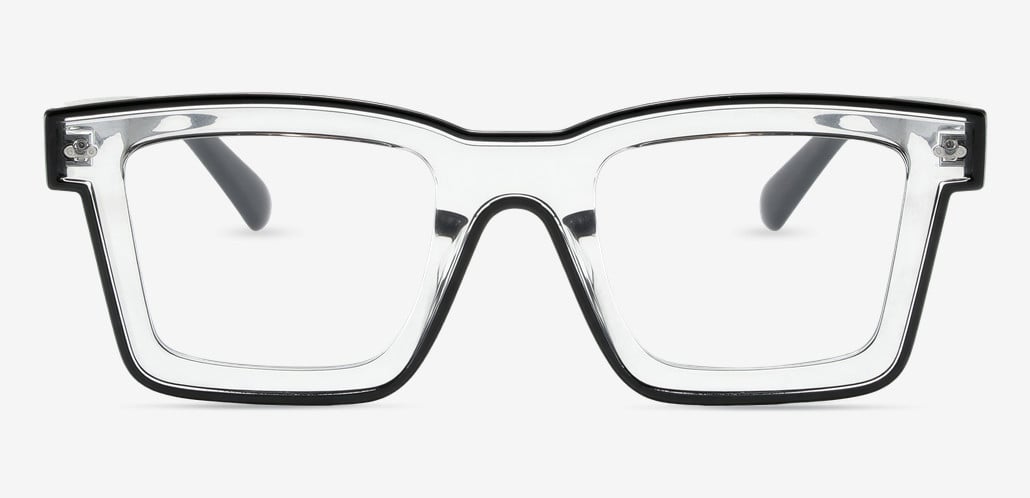
Product pages list lens width, bridge width and temple length in millimeters, but they almost never say where the bridge and temples join the frame. Those two junctions are exactly what the 1988 tips adjust. You can read both from a front-facing product photo.
- Screenshot the front photo. Use the straight-on product image, not a tilted lifestyle shot.
- Draw two lines. With your phone's markup tool, draw one line across the tops of both lenses and one across their middles.
- Read the bridge. Find the top edge of the bridge and place it in a band: high, middle or low.
- Read the temples. Find where each arm meets the front and place it the same way. If the front photo hides it, use a side photo.
- Note the color. Is each junction lighter than the rest of the frame, the same, or darker?
- Write a short code. For example: "Bridge low, dark. Temples high, light." Now compare it with the table below.
| Your reading | What the 1988 card used it for | Pick it if you want to… |
|---|---|---|
| Bridge low, dark | Playing down a long nose or wide-set eyes | Pull attention toward the center of your face |
| Bridge high, light | Opening up close-set eyes or a small nose | Make the space between your eyes read wider |
| Keyhole bridge | Balancing a wider base of the nose | Show more of the nose's sides |
| Temples high, light | Lengthening a short face, slimming a wide one | Lift the face's dividing line |
| Temples low, dark | Shortening a long face, balancing a high forehead | Lower the face's dividing line |
Then test it on yourself. In virtual try-on, choose two frames that differ in one junction only, such as the same size and color but a high bridge versus a low one. Take a screenshot of each, hold your phone at arm's length and look at both. The difference is usually easier to see in two still images than while you're moving.
What the weight gap means for your lenses today
Lighter lens materials made big frames wearable in the 80s, and the same logic still applies. Whatever material you choose, a larger lens uses more of it, so it weighs more than the same lens in a small frame.
- Mild prescription or none? Standard plastic lenses in a big 80s frame are usually comfortable. Size is the fun part, so enjoy it.
- Stronger prescription? Big lenses show more lens edge on nearsighted prescriptions and more center thickness on farsighted ones. Before you order, check which lens materials are offered and compare the options shown on the product page.
- Want the 80s look with less lens? Go to the second half of the decade: a smaller metal frame or a tortoise frame is just as true to the era and uses less lens.
80s glasses FAQ
What were 80s glasses called?
You'll still see period terms such as aviator (a teardrop lens, often with a double bridge), keyhole bridge, P3 (a softened round lens with a flatter top), browline and oversized. Adding one of these words to "80s glasses" narrows a search quickly.
Were glasses heavier in the 80s?
It depended on the lenses. A glass lens weighs about twice as much as a plastic lens of the same size, and glass was still in use early in the decade. As plastic became the norm, big frames became far more comfortable to wear all day.
Are 80s glasses still in style?
Large plastic frames have returned more than once. A 2011 trade retrospective was already noting large plastic frames and retro shapes coming back. Whether a pair looks current today depends less on size and more on the bridge, temple and color choices covered above.
Can I get 80s glasses with my prescription?
Yes. A new 80s-style frame can take prescription lenses like any other frame. If your prescription is strong, check the lens material options before choosing a very large frame.
How do I make 80s glasses look modern instead of like a costume?
Decide what you want the frame to do for your face, choose the junction that does it, and keep the other details quiet. For example, keep the big lens but choose a light bridge and top-set temples in tortoise or crystal instead of neon.
Are 80s glasses for men or women?
Both. The 1988 fitting tips weren't written for one gender, and large plastic frames and aviators were worn widely. Choose by bridge, temple and size, not by the department.
The short version
Big 80s frames were made possible by lighter lenses and made flattering by small decisions about bridges, temples and hair. Run the Junction Check on any frame in our 80s Glasses collection, and you'll know which of those decisions it has already made for you.
Sources and how we wrote this
- Amy Spiezio and Alicia Isenberg Hoglund, "Eyewear & Sunglass Fashions: 25 years of style, stars, and sales," Eyecare Business, September 2011. Includes the decade-by-decade frame trends and the "Face Fitting" tips first published in January 1988.
- Ophthalmic lens material data for crown glass (2.54 g/cm³) and CR-39 plastic (1.32 g/cm³), as summarized in Ophthalmology Times, "Spectacles sport variety of lens materials."
- Polycarbonate density (1.20 g/cm³): U.S. Patent 6,379,004. Commercial introduction of polycarbonate prescription lenses in 1980: U.S. Patent 4,828,769.
- Timeline of the shift from glass to plastic lenses: Rx-Safety, "What are Eyeglass Lenses Made of?"
This article was researched and written by the Aoolia editorial team from the published sources above. The 1988 tips are paraphrased, not quoted. Weight percentages are calculated from the listed densities.