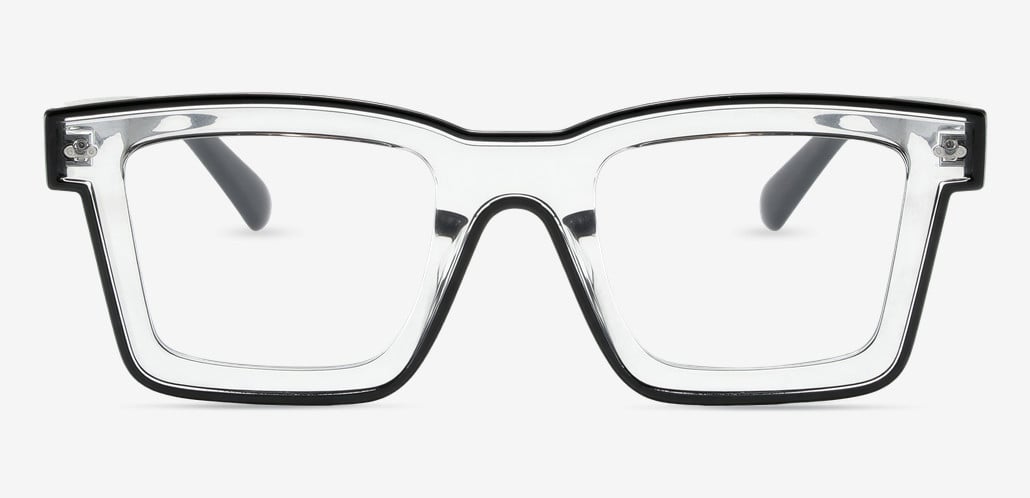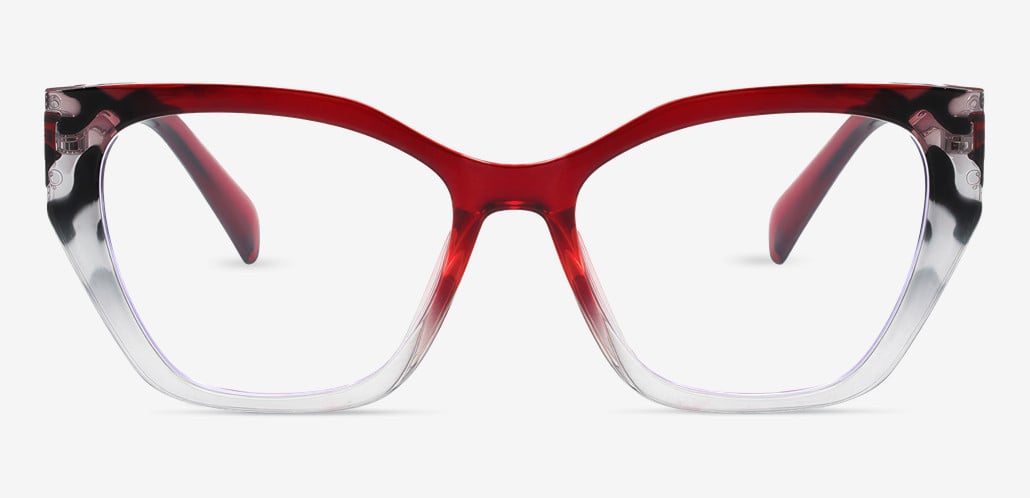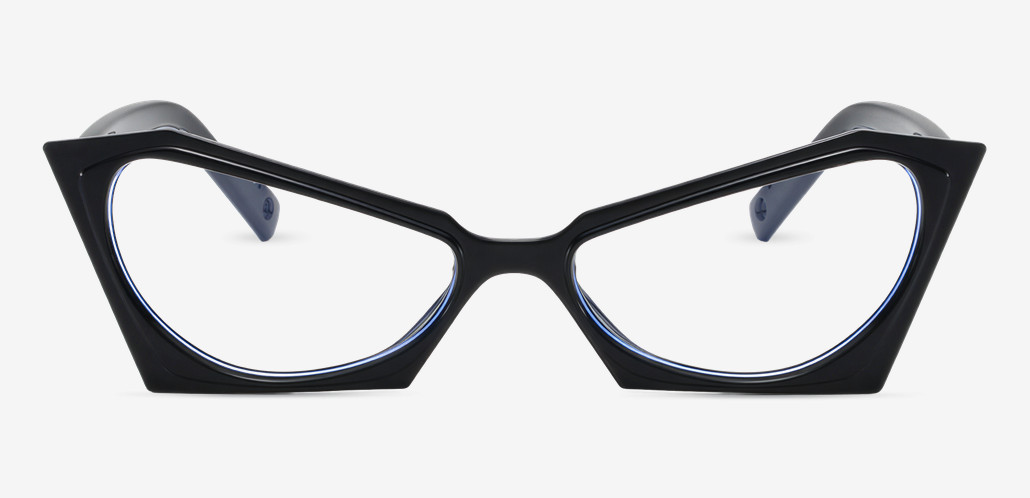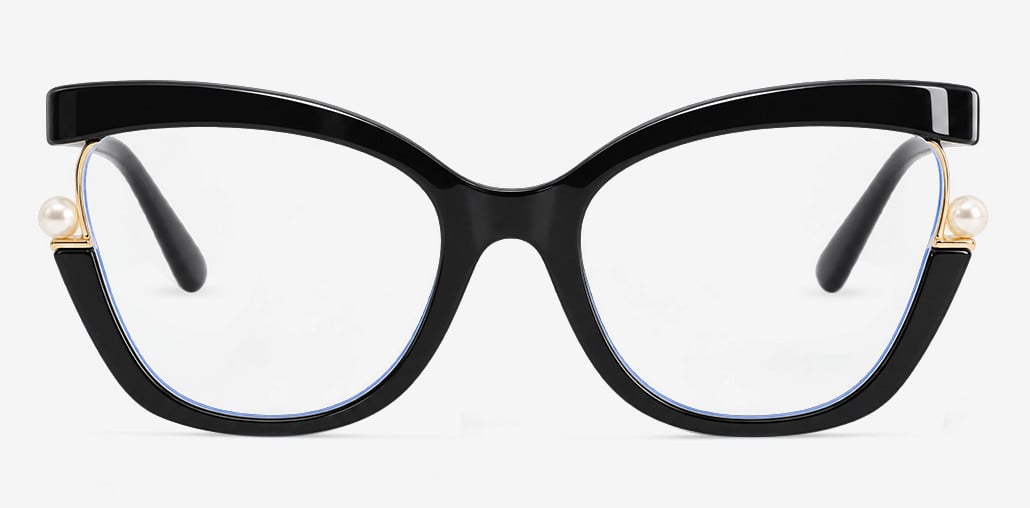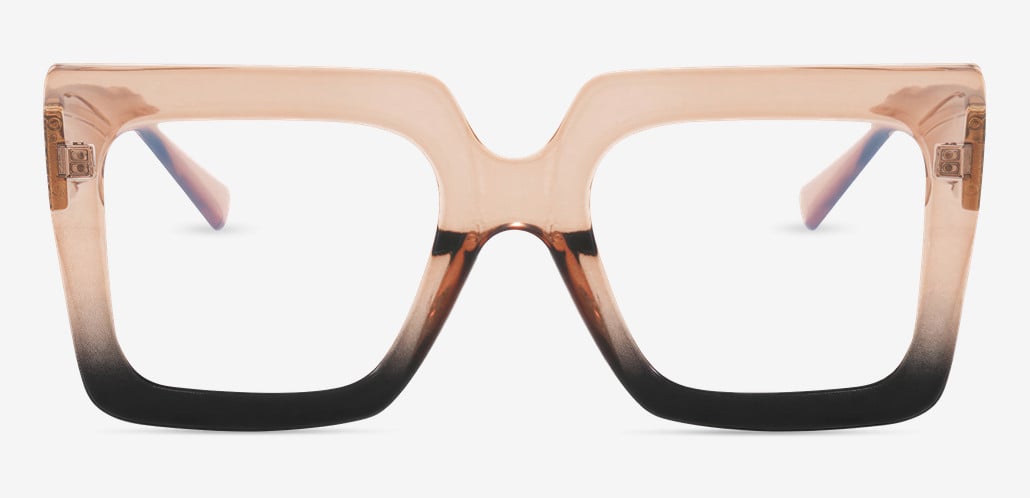

Colorful Glasses · Color & Care
Colorful Glasses: How Deep the Color Goes —and Why It Decides How Your Frame Ages
Two frames can share the same cherry red on day one and look nothing alike a year later. The difference isn't the shade. It's how far the color goes into the frame.
Colorful glasses lose their color in one of two ways: slowly and evenly, or suddenly and in spots. Which one your pair does depends less on the shade you pick than on how deep the color goes into the frame.
Put two cherry-red frames side by side on launch day and they can look identical. A year later, one has softened a little all over, the way a favorite T-shirt does. The other has a pale chip on the nose bridge and a worn patch where the temple rubs behind your ear.
Most advice about colorful glasses stops at the mirror: skin tone, eye color, what goes with your wardrobe. That helps you pick a shade, but it says nothing about whether the shade survives. Our colorful glasses collection already sorts frames by Color Volume, meaning how loud a color reads. This guide answers the other question: how long it lasts.

The short version · four color depths
Through
Ages by dulling
The color is the material, as in most solid acetate and dyed nylon. It dulls slowly and can usually be polished back.
Layered
Dulls, then shows a layer
Sheets of different colors bonded together. Behaves like through color until a deep scratch reaches the next layer.
Grown
Scratches to a bare line
Anodized titanium or aluminum. It won't peel, but a scratch can erase it in a thin line.
Applied
Ages by chipping
Paint, lacquer, plating or vacuum coatings. Often the brightest on day one, and the only kind that chips or flakes.
Brightness isn't the risk. Shallowness is.
01 · The framework
The four color depths in colorful glasses
Every colored frame gets its color in one of four ways, and each way wears out differently. The material name on a product page (acetate, metal, TR90) narrows it down, but it doesn't settle it.
| Color depth | How the color gets there | Common in | How it ages | Where wear shows first |
|---|---|---|---|---|
| Through | Pigment is mixed into the material before the frame is cut or molded | Solid and see-through acetate; nylon or TR90 dyed in the mass | Dulls or shifts slightly over years; never chips | Nose pads and temple tips, as a hazy or lighter patch |
| Layered | Sheets of different colors are bonded under heat and pressure, then cut | Two-tone acetate, "color inside" frames, stripes and fades | Same as through color, until a deep gouge exposes the next layer | Corners and edges, where a hard knock cuts deepest |
| Grown | Electric current thickens the metal's own oxide skin; on aluminum, dye is sealed into it | Anodized titanium and aluminum fronts or temples | Doesn't peel or flake; color disappears along scratches | Thin bright lines where keys, zippers or the hinge rub |
| Applied | A separate film sits on top: paint, lacquer, electroplating, ion plating or other vacuum coatings | Most colored metal frames; many molded plastic frames | Holds until the bond fails, then chips or flakes and shows the base | Bridge, hinge, rim corners, and the temple behind the ear |
A few facts behind the table:
- Acetate color is made before the frame exists. Colored powders are mixed into the material, rolled, pressed into a block for about a day, and sliced into sheets that cure before cutting (Optician). Laminated acetate stacks those sheets and bonds them, so scuffs on the surface don't remove the color.
- Anodized titanium has no dye at all. The color comes from an oxide layer roughly 10 to 300 nanometers thick, set by voltage, that bends light into color (Xometry). That's why true red is out of reach for the process (Monster Bolts): a bright red titanium frame is coated, not anodized.
- Aluminum works differently. Its oxide is porous, so dye soaks in and a hot-water bath seals it (Machine Design).
- Applied color depends on the bond. Industry forums are full of finishers chasing coatings on colored metal frames that wear through within months. Good coatings last for years; the point is that adhesion, not the color itself, is what fails.
The rule worth remembering
Through color ages by dulling, applied color ages by chipping. You'll barely notice the first. You'll notice the second the day it happens.
02 · At-home check
The Cut-Edge Read: find out what you bought in two minutes
You can usually tell a frame's color depth at home, before the return window closes, by looking where the frame was cut, drilled or rubbed. Through color looks the same at every edge; applied color thins out exactly there.
Do it in daylight, with the lenses clean so reflections don't fool you.
- Read the listing first. Words like painted, lacquered, coated, plated, IP or PVD mean applied color. Anodized means grown color. Laminated, two-layer or double-layer means layered.
- Hold a plastic frame up to a window. If light passes through it, the color is almost always in the material. Look along the edges: a stripe of a second color means layered.
- Open and close the temples. On a plastic frame, look at the edges of the hinge pocket. On a metal frame, look at the hinge knuckles and screw heads, the parts that rub during assembly and every time you fold the pair.
- Check the inside of the temples. A different color inside is usually a layered sheet by design, not a defect.
- Run a fingertip along the rim's inner edge. Through-colored acetate feels uniform. Applied color sometimes shows a slight ridge or a thinner tint on sharp edges.
| What you see | What it tells you |
|---|---|
| Same color in every corner, even at a cut edge | Through — expect slow, even dulling |
| A clean stripe of a second color along the edge | Layered — treat corners gently |
| A metal frame with even, slightly iridescent color and no film edge | Likely grown — scratches are the main risk |
| A thin silver or gray line at a hinge knuckle on day one | Applied — already wearing at a rub point |
| Bubbles, orange-peel texture or a lifted edge anywhere | Applied, weak bond — photograph it and contact us within the return window |
Finding applied color isn't a reason to send a pair back. Many of the brightest, most saturated frames are coated, and they last well when you treat them as coated. The read just tells you which care rules apply to your pair.
03 · What wears it off
The Contact Ledger: what actually wears color off
A lot of color loss on glasses has less to do with sunlight or age than with what your hands and face carry onto the frame several times a day, and each color depth reacts to a different item on that list.
| What touches the frame | Through / layered acetate | Grown (anodized metal) | Applied (paint, plating, coating) | What to do |
|---|---|---|---|---|
| Bug spray with DEET | HighDEET can soften and cloud acetate | Low | HighCan lift paint and lacquer | Take glasses off, apply, wash your hands before touching the frame |
| Sunscreen, especially spray | MediumLeaves a film that dulls the shine | Low | MediumFilm builds up at edges and seams | Spray with glasses off; let lotion dry first |
| Skin oil, sweat, makeup | High at contact pointsCauses lighter or cloudy patches | Low | High at contact pointsSweat works under any chip | Rinse nose pads and temple tips with mild soap a few times a week |
| Hair spray, dry shampoo | Low to mediumSticky residue on temples | Low | Medium | Style your hair before putting glasses on |
| Keys, zippers, a loose bag | LowScuffs polish out | HighScratches remove color in a line | HighChips start here | Use the case; never pocket them with keys |
| Alcohol wipes and household glass cleaner | Medium | Low | High | Use water and mild dish soap on the frame |
The two items most people underestimate:
- DEET. EPA-approved repellent labels warn that DEET may damage some plastics, including eyeglass frames, along with painted or varnished surfaces (EPA label). The National Pesticide Information Center explains why: DEET acts as a plasticizer, so it can attack frames, lenses and painted finishes (NPIC). A July week at the lake, with sunscreen in the morning and bug spray at dusk, is a hard week for any colorful frame.
- Your own skin. Frame maker Lunor notes that acetate can discolor or lose shape from everyday contact with skin, sweat and makeup (Lunor). That's why the first faded spot on an acetate frame is almost always on the nose pads or right behind the ear.
Spray sunscreen and hair spray also show up on eyewear makers' lists of things to keep off your glasses (Raen). A short habit covers most of it: glasses go on last, after sunscreen, repellent and hair products.
One reassurance: frames built to the international frame standard, ISO 12870, are tested for resistance to perspiration with artificial sweat (ISO 12870 contents). Normal sweat shouldn't strip a well-made frame. Years of it, concentrated at two contact points, is a different story.
04 · Repair reality
What a scratch costs you, by color depth
A scratch on a through-colored frame is a cleaning job; a chip on an applied finish is usually permanent. That difference matters more than the price tag when you're deciding how careful you'll need to be.
| Color depth | Light scuff | Deep scratch or chip | Realistic fix |
|---|---|---|---|
| Through | Polishes out | Leaves a groove, but the color in it matches | An eyewear shop can buff and polish acetate back to an even shine |
| Layered | Polishes out | Can show the color underneath on a corner | Light polishing only; heavy buffing on edges can cut into the next layer |
| Grown | Barely visible | Leaves a thin line of bare metal | Titanium can be re-anodized in principle, but for glasses it's rarely offered; most people live with the line |
| Applied | Often stays as a dull mark | Exposes the base metal or plastic | Touch-up paint rarely matches; replacing the damaged part is the clean fix |
Two details people learn the hard way:
- Matte frames don't polish like glossy ones. Buffing a matte acetate frame can leave shiny spots. Clean it with water and mild soap, and leave the finish alone.
- A home repaint is a project, not a repair. DIY threads on painted metal frames run through strippers, primers and hardeners, and the results still vary (Finishing.com). If a coated frame matters to you, the best protection is preventing the first chip.
There's an upside to through color here: every time it's polished, you're looking at the same color it had on day one, just a fraction of a millimeter deeper.
05 · Choosing
Match the color depth to your week
The right color depth is the one that fits how hard your week is on a frame. Pick the row that sounds most like you.
| If your week looks like this | Best color depth | Good fit | Think twice about |
|---|---|---|---|
| Hikes, yard work, beach days, kids' games in the sun | Through | Solid or see-through acetate; molded nylon or TR90 with color in the material | Bright painted metal: sunscreen, repellent and sweat all target it |
| Glasses on 12+ hours a day, mostly indoors | Through Applied | Almost anything, if you rinse the nose pads and temple tips weekly | Matte finishes if you wear heavy makeup; residue shows fast |
| No case, glasses tossed in a bag or a car cup holder | Through | Acetate, because scuffs polish out | Anodized and coated metal: scratches show as lines or chips |
| You own several pairs and rotate them | Any | The brightest, glossiest finishes, since each pair gets lighter wear | Nothing in particular |
| You want slim metal and color that can't peel | Grown | Anodized titanium in blues, purples, greens and golds | Expecting a true red from anodizing; red metal frames are coated |
Chip contrast: how bad will wear look?
A chip shows the color underneath, so what matters is how different the base is from the finish. Navy paint over a dark base hides a chip well; pastel pink over silver metal shows every one. When you're choosing a bright applied color, a darker or similar-toned base buys you a lot of forgiveness.
Pastel pink over silver
Every chip shows
If you want the loudest colors on our colorful glasses page and a rough-and-tumble week, the safest pairing is a Pop or Mix color in acetate. The color goes all the way through, so it can take the knocks.
06 · Color vision
Buying colorful glasses when you see color differently
If you're one of the roughly 1 in 12 men or 1 in 200 women with a color vision deficiency (Nikon Lenswear), the frame you see in the mirror may not be the frame everyone else sees. The usual result isn't an ugly pair. It's a pair that's louder or quieter than you meant it to be.
The most common type, deuteranomaly, makes some greens look redder; protanomaly makes some reds look greener and less bright (National Eye Institute). People with red-green types also commonly mix up reds, greens, browns and oranges, and some blues with purples (Colour Blind Awareness).
| Frame you think you're buying | What others may see | Quick check |
|---|---|---|
| A quiet olive or khaki | A bright grass or kelly green | Ask someone whether it reads as "green" from across a room |
| A dull brick or rust | A clear, saturated red or orange | Read the color name on the listing before you trust the photo |
| A navy that feels safe | Plum or violet | Compare it on screen next to a frame named "navy" |
| A two-tone that looks like one muddy color | A sharp red-and-green or orange-and-green split | Check the listing for "two-tone" or two color names |
Three habits make online color shopping much easier:
- Shop by the color name, then confirm with a second pair of eyes. Send a Virtual Try-On screenshot and ask one question: "Is this loud or quiet?" That answer matters more than "Do you like it?"
- Trust yourself most on yellows, clear blues and light-versus-dark. Those are outside the color pairs red-green types usually mix up.
- Keep the confirmation. Save the screenshot and the exact color name. When you reorder or replace a temple later, you'll want the same shade, not your best guess at it.
07 · Questions
Colorful glasses FAQ
Do colored glasses frames fade over time?
Some do, slowly. Frames colored all the way through, like most acetate, tend to dull evenly over years, usually first at the nose pads and temple tips. Frames with applied color rarely fade; they chip instead. Rinsing contact points with mild soap slows both.
Why is the paint coming off my glasses?
The color was applied on top of the frame, and the bond failed at a rub point. Hinges, the bridge and the temple behind the ear see the most friction, sweat and skin oil. Repellent, sunscreen and alcohol wipes speed it up. Once a chip starts, sweat can work underneath it.
Can you repaint glasses frames?
You can, but it rarely looks factory-new. A durable repaint means stripping, priming and curing a hard finish, and paint near hinges or lens grooves can interfere with fit. For a chipped temple, a replacement part is usually the cleaner fix. Through-colored acetate needs polishing, not paint.
Does bug spray ruin glasses?
DEET-based bug spray can. EPA-approved labels warn that DEET may damage some plastics, including eyeglass frames, and painted or varnished surfaces. Take your glasses off before applying any repellent, wash your hands afterward, and wipe the frame with water if spray reaches it.
Are colorful metal glasses painted?
Most are coated or plated, which counts as applied color. The exception is anodized titanium or aluminum, where the color is part of the metal's surface layer and can't peel. Anodized titanium can't produce a true red, so a bright red metal frame is almost always coated.
Is the color on TR90 frames painted on?
It depends on the frame. TR90 and other nylon blends can be dyed in the mass, so the color runs through, but many molded frames also get a sprayed finish for gloss or a specific shade. Check the hinge area and the listing description to tell which you have.
Why is there a cloudy or lighter spot on my acetate frame?
It's almost always at a contact point, and it comes from skin oil, sweat or makeup working on the surface over time. It isn't the color washing out; the surface has gone dull. A professional clean and polish at an eyewear shop can often bring the shine back.
Pick the loudness, then pick the depth
Browse frames by Color Volume, then use the Cut-Edge Read when your pair arrives.
Shop colorful glassesSources
- Optician: A-Z of eyewear, acetate production
- Lens.com: Lamination in eyeglass frame design
- Xometry: Titanium anodizing
- Monster Bolts: Anodized titanium color chart
- Machine Design: Mastering metallic colors
- Finishing.com: Coatings on colored eyeglass frames
- US EPA: DEET repellent label, Reg. No. 2217-779
- National Pesticide Information Center: DEET technical fact sheet
- Lunor: Acetate frame care
- Raen: Frame care
- ISO 12870:2016 table of contents (SFS)
- National Eye Institute: Types of color vision deficiency
- Nikon Lenswear: Color vision deficiency
- Colour Blind Awareness: Types of colour blindness