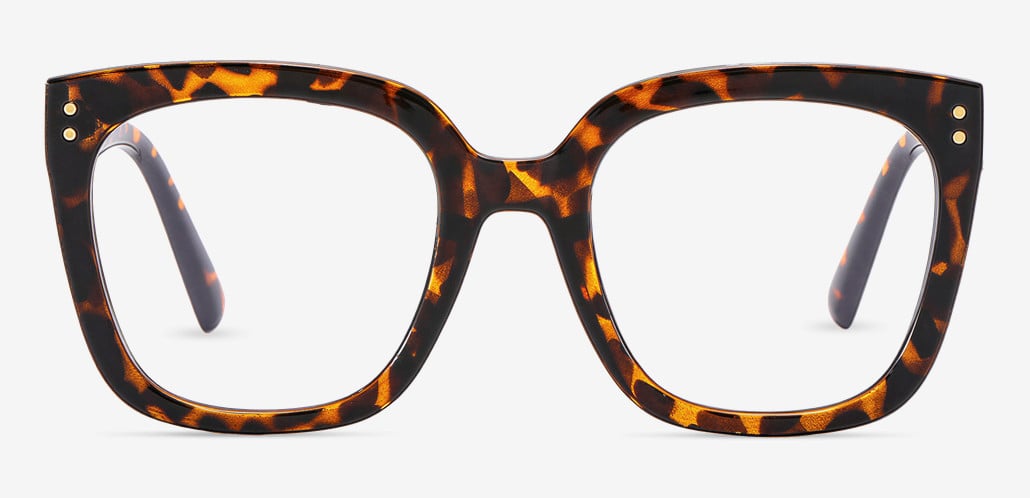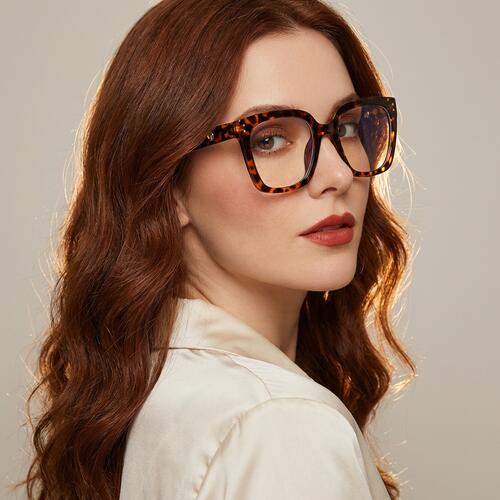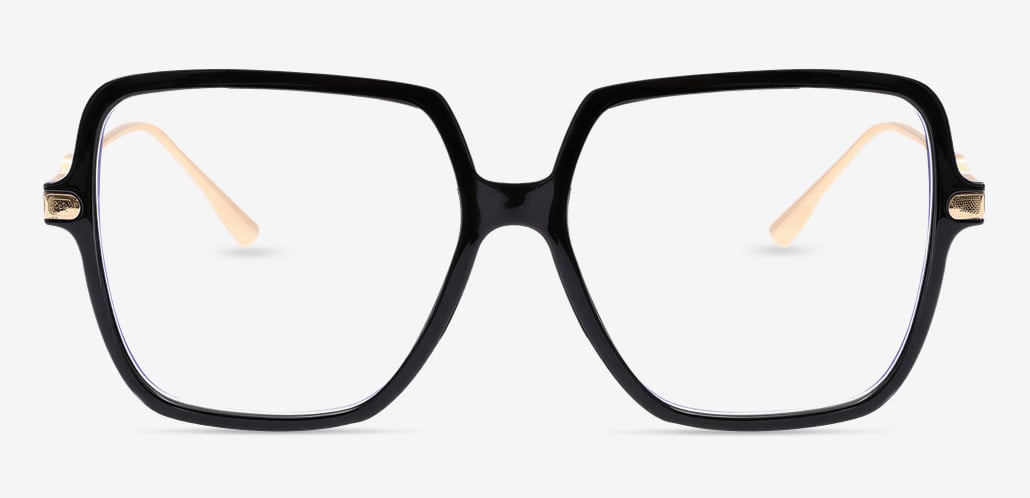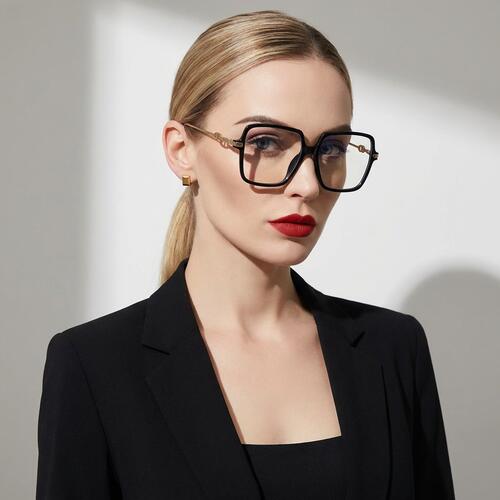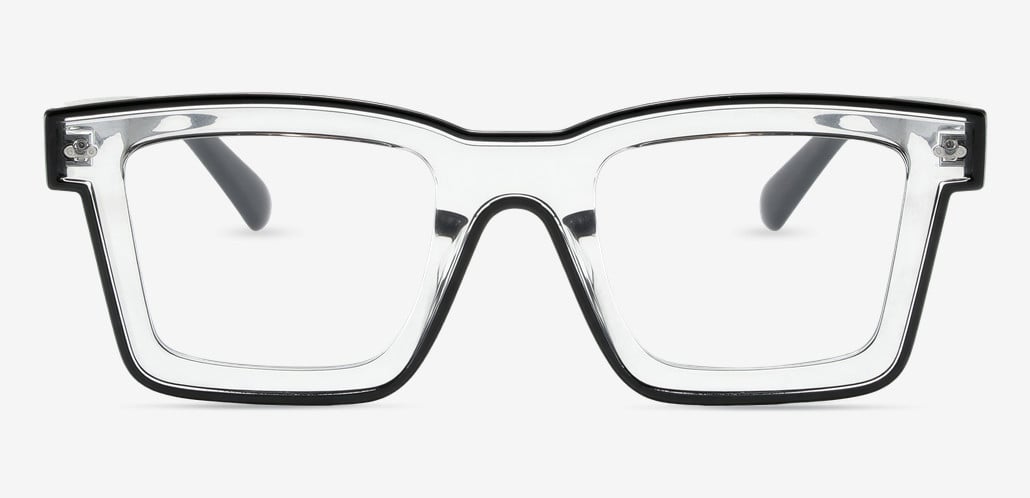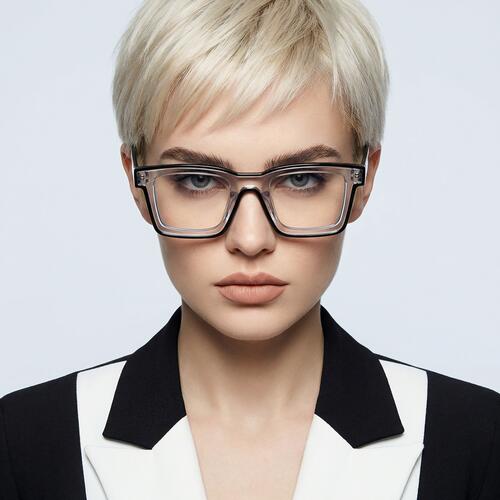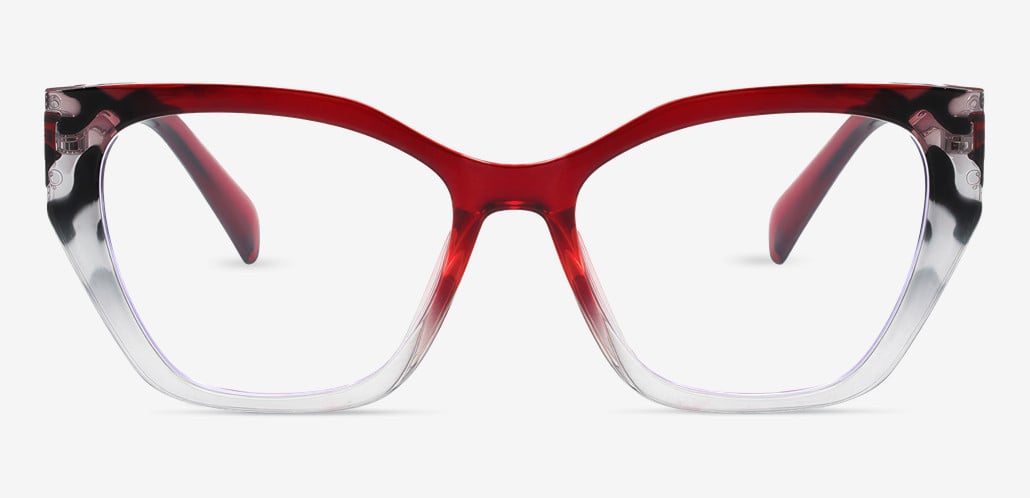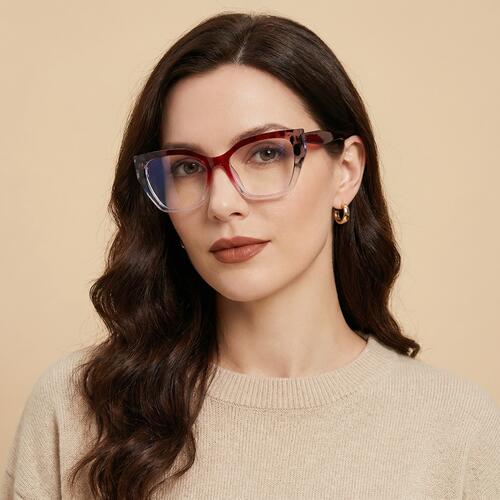

Round Face Style Guide
Best Sunglasses for Round Faces: Think Like Contour Makeup
Angular frames are only half the answer. Where a pair puts its darkness on your face decides whether it slims, shortens or does nothing at all.
"Wear angular frames" is the advice every round-face guide gives, and it isn't wrong. It just doesn't explain why two square pairs can look so different on the same face. One makes your face look sharper. The other somehow makes it look wider.
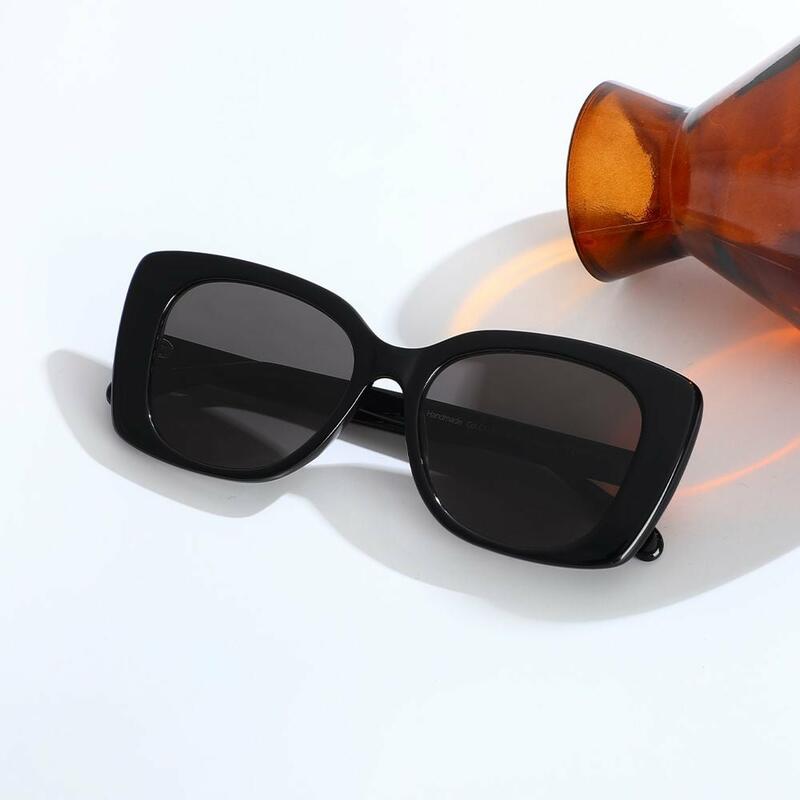
Here's what's missing. With dark lenses in, sunglasses are the darkest thing on your face, sitting right across its widest part. That makes them behave a lot like contour makeup, which works by deciding where shadow goes. Put the shadow in the right places and almost any angular shape works. Put it in the wrong places and the angles won't save you.
This guide turns that idea into three moves you can check on any product photo, a two-minute test you can run on your own try-on screenshots, and fixes for two fit problems that come up again and again with fuller faces. If you'd rather start from frames that are already narrowed down, our best sunglasses for round faces edit is a good place to begin.
The short version
- The best sunglasses for round faces are angular frames at least as wide as your cheekbones. But where the frame puts its weight matters as much as its shape.
- Shade the sides: keep the thickest, darkest parts of the frame at its outer edges, not near your nose.
- Sculpt the cheek line: choose a lower lens edge that's level or rises toward your temples. Avoid one that droops outward.
- Blend the lower edge: the bottom rim should be quieter than the top, so it doesn't draw a stripe across the widest part of your face.
- Fit can undo all three: a frame that rests on your cheeks or bows out at the temples loses its shape once it's on.
What makes a face read as round
Three things, usually together:
- The face is about as long as it is wide.
- It's widest across the cheeks.
- The jaw and chin curve rather than corner.
Pull your hair back and look straight into a mirror. If all three fit, you're in the right place. If your jaw is broad and clearly angular, your face is closer to square, and the advice shifts.
None of this is about size or weight. "Round" describes proportion and contour, and plenty of slim people have round faces. That changes what you're trying to do. You aren't trying to hide your face. You're trying to suggest a little length and a few edges where the face doesn't have them.
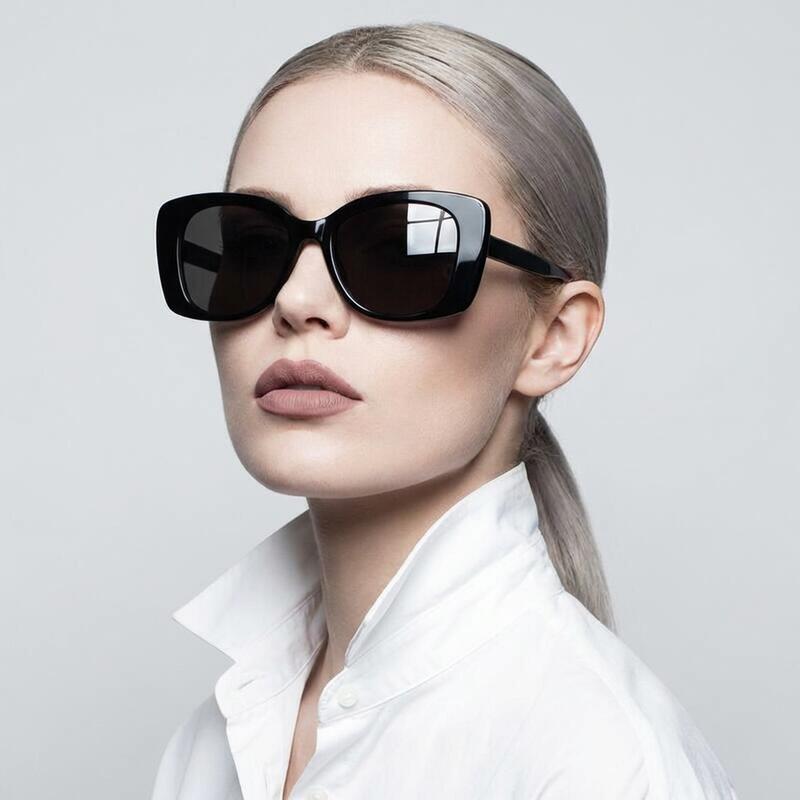
Why sunglasses work like contour
Contour makeup for a round face follows a familiar map. A little shadow goes at the temples and along the sides of the face. A soft diagonal goes into the hollow under each cheekbone, and everything is blended so no hard line shows. Shadow at the edges pulls the sides in, and the diagonal suggests a cheekbone that full cheeks tend to hide. The face reads longer and more sculpted without anything being covered up.
Sunglasses land right on that map. The lenses cover the outer eye area and the top of the cheeks, the end pieces sit near the temples, and the lower rim runs close to where the cheek diagonal goes. So every pair is already doing contour, whether it helps you or not. The three moves below turn that into something you can check before you buy.
- Shade the sides: the frame's weight sits at the outer edges, where contour puts temple shadow.
- Sculpt the cheek line: the dashed line is contour's cheekbone diagonal. A lower lens edge that runs level or rises with it reads sculpted.
- Blend the lower edge: a thin, quiet bottom rim under a stronger top keeps the widest part of the face free of a hard stripe.
The contour map, drawn on a frame that passes all three moves.
The Contour Map: three moves for round-face sunglasses
Each move has one job, something to look for in product photos, a common miss and a quick check.
Shade the sides
A frame's visual weight is its thickest, darkest material. On a round face, you want that weight at the outer edges, where it reads like shadow at the temples and pulls the sides of the face in.
Look forA front at least as wide as the widest point of your face. End pieces (the corners where the front meets the arms) that are as bold as the rest of the frame, or bolder. Arms in the same dark color as the front, which carry the shade back toward your ears.
Common missLenses set close together with chunky material between them and thin outer corners. The weight piles up in the middle of the face, the opposite of what contour does.
Quick checkIn a front-facing try-on photo, the outer edges of the frame should land at the sides of your face or just past them.
Sculpt the cheek line
The lower edge of each lens runs close to where contour puts the cheekbone diagonal, so its direction matters. A line that rises toward the temples suggests a cheekbone. A line that sags outward draws a curve right over the fullest part of the cheek.
Look forLower edges that rise toward the outer corners, as on cat-eye frames and many rectangles. A flat lower edge is neutral and works with nearly everything.
Common missDeep lenses whose lower edge drops away at the outer side, like a classic teardrop aviator or a deep round lens. They echo the curve of the cheek instead of cutting across it.
Quick checkRun a finger along the lower rim in a product photo, from the nose outward. Rising or flat is good. Falling is the one to skip.
Blend the lower edge
Contour looks natural because it's blended. Nobody draws a hard line across the widest part of a face. A thick, dark or brightly colored bottom rim does exactly that: it lays a stripe across the cheeks and makes the face look cut in half, with the lower half wider.
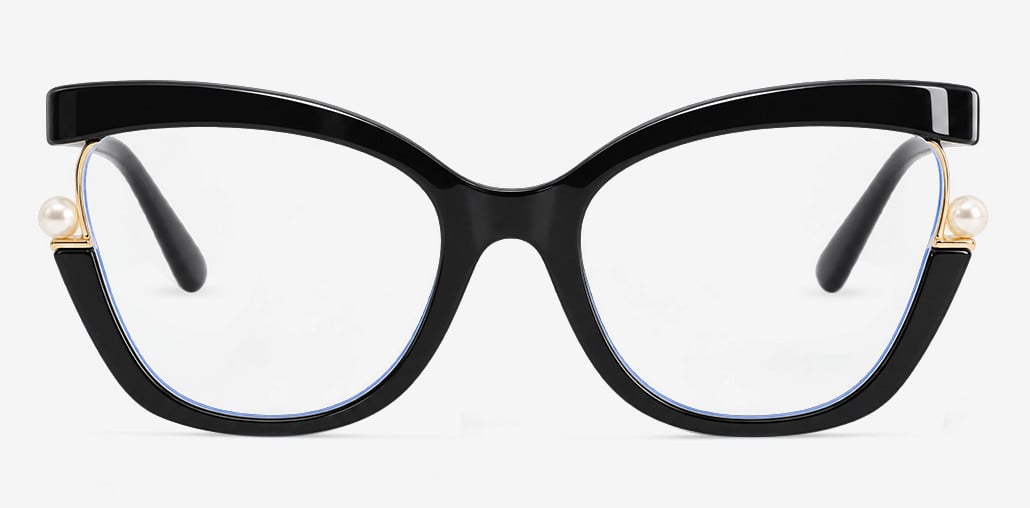
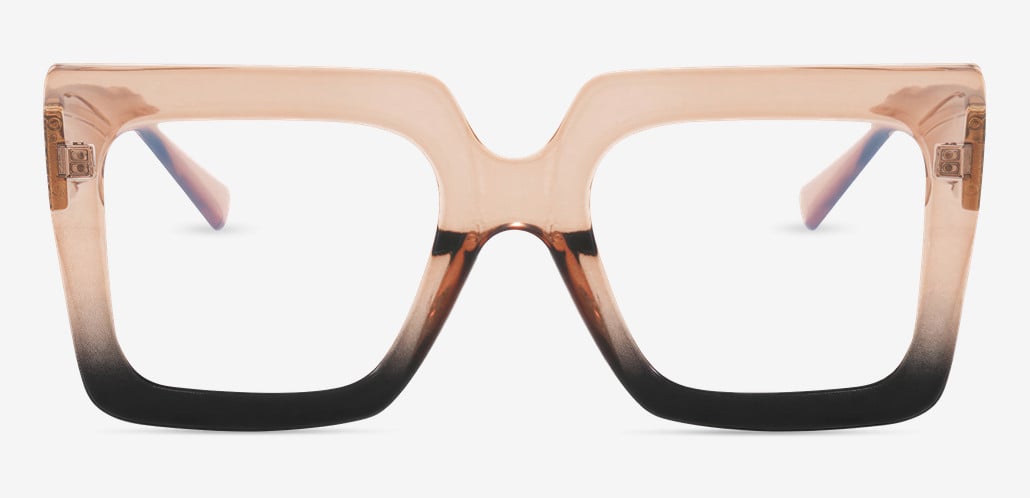
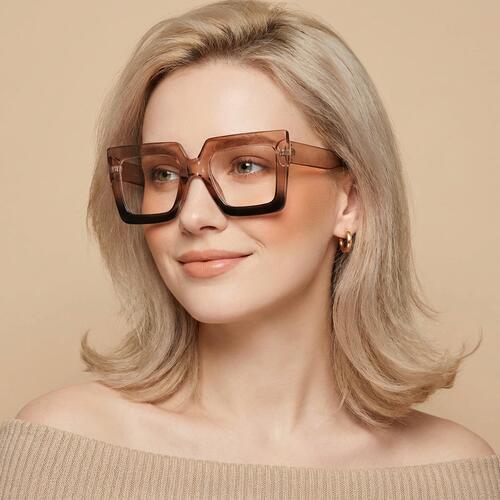
Look forFrames that are bolder on top than on the bottom, such as acetate that thins toward the lower rim, a strong top bar over a fine lower rim, or a semi-rimless build. Two-tone frames that are darker on top. Gradient lenses, dark at the top and lighter toward the bottom, soften the lower edge further.
Common missA heavy bottom rim in a high-contrast color, especially on a frame whose top is thin.
Quick checkCompare the top and bottom rims in a product photo. If the bottom is the louder of the two, keep looking.
You don't need all three
Start with the move your face asks for most:
- Your face looks widest at the temples and cheekbones: start with shade the sides.
- Your cheeks are the first thing you notice: start with sculpt the cheek line.
- Your current sunglasses seem to cut your face in half: start with blend the lower edge.
A pair that nails one move and doesn't fail the other two is usually a keeper.
The Contour Sketch: test frames on your own face
Product photos show frames on someone else's face, or on no face at all. This quick check puts the contour map on yours. You need a phone with a photo markup tool (most have one built in) and a few frames that offer Try On.
- Find your cheekbone hollow. Look in a mirror and gently suck in your cheeks. The hollow that appears under each cheekbone is where contour's diagonal goes. Notice roughly where it runs, from just in front of the ear down toward the corner of the mouth.
- Take matching screenshots. Try on each frame you're considering. Face the camera straight on with your hair pulled back, a relaxed expression and even light, and screenshot each one.
- Draw three marks on each screenshot. Draw a short vertical line at each side of your face at eye level, where your face meets your hair or the background. Then draw a diagonal on each cheek along the hollow you found.
- Read the marks. Shade: do the outer edges of the frame reach your side lines? Sculpt: does the lower rim sit level with your cheek diagonals or above them, rather than curving down across them? Blend: is the bottom rim the boldest line in the picture? If it is, it's acting as a stripe.
- Keep the strongest one. Choose the frame that passes your priority move and at least one other. Line the marked-up screenshots up side by side and the winner is usually obvious, even if the frames looked equally good in the shop.
Popular shapes, through the contour map
Shape still matters. It just isn't the whole story. Here's how the common shapes usually play out, and what to check within each.
Square Strong start
Corners give a round face edges it doesn't have, and the width usually covers shading the sides. Check the lower rim: on many squares it's as thick as the top, so look for one that's a little lighter underneath.
Rectangle Strong start
Wider than it is tall, it leaves more of the face visible above and below the frame, which reads as length. The lower edge is usually flat, which is neutral. A slight upsweep at the outer corners helps more.
Cat-eye Strong start
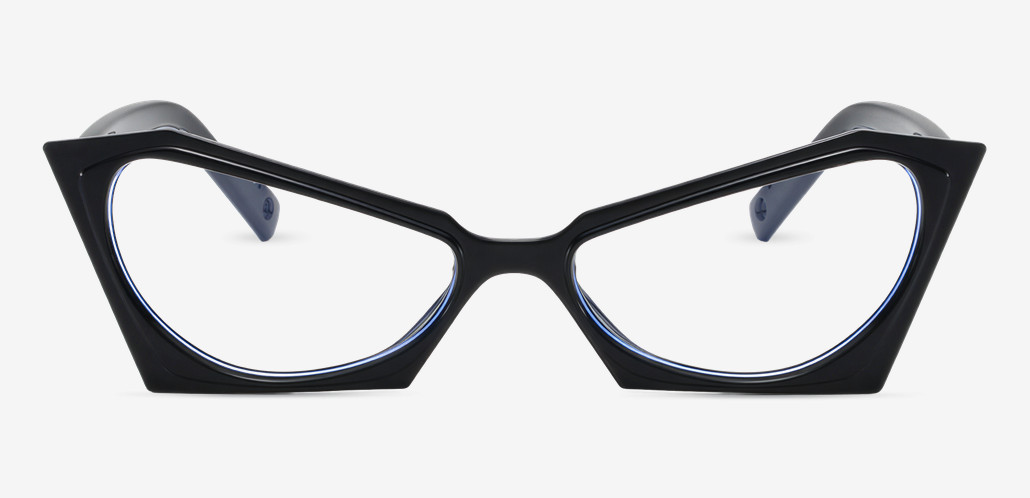
The most natural fit for sculpting the cheek line, because the whole frame rises toward the temples. A defined outer corner does more than a softly rounded one.
Aviator Depends on version
A flatter top with a fine lower rim blends well. A deep teardrop that drops low at the outer edge fails the cheek line. Pick the squared-off versions over the classic drop.
Oversized Depends on version
Size takes care of shading the sides. The risk is depth: very tall lenses run down over full cheeks and can rest on them (see the fit section below). Oversized and angular beats oversized and round.
Geometric Strong start
Hexagons and octagons add several small angles. Look at the bottom facet. A flat or rising lower side passes the cheek line, while a pointed bottom facet pulls the eye down.
Thin metal Depends on version
Wire frames have very little visual weight, so the lenses do the contouring. Choose a wide, angular lens with a level or rising lower edge, and a darker tint.
Round Style choice
A round frame echoes the face and has no cheek-line angle. It can still work beautifully as a deliberate look. More on that below.
Want a shortcut? The frames in our best sunglasses for round faces collection are already narrowed to angular shapes, so you can go straight to the Contour Sketch with two or three favorites.
Two fit problems the face-shape charts skip
Style advice assumes a frame sits on you the way it sits on the model. On fuller faces, two things often get in the way, and both quietly undo the contour moves above.
The frame rests on your cheeks
Signs: the lower rim touches your cheeks when you smile, the frame hops up when you laugh, or you keep finding smudges on the bottom of the lenses.
Why it hurts the look: a frame that moves with every expression can't hold a clean cheek line. A rim pressed into the cheeks also makes them look fuller.
What helps:
- Adjustable nose pads, which raise the frame and can be fine-tuned. For full cheeks or a lower nose bridge, they're often the single most useful feature.
- Lenses that are wider than they are tall, which leave space underneath.
- A front that doesn't tip sharply in at the bottom, which keeps the lower rim away from your face.
The arms bow out at the temples
Signs: pressure just above or behind the ears, a frame that creeps forward on your nose, or a front that looks flatter on you than in the photos. In a photo taken from above your head, the arms angle outward instead of running straight back.
Why it hurts the look: when a frame is too narrow, your head pushes the arms out. That flattens the front and makes the whole pair look small, the opposite of shading the sides.
What helps:
- Get the width right before you think about shape.
- Spring hinges and flexible materials such as TR90 give a wider head more room.
- If a pair is close but snug, an eyewear shop can often adjust the arms. Don't heat or bend them yourself.
When to ignore all of this
Some people with round faces love round sunglasses, and that's a style choice, not a mistake. The trick is commitment. Echoing your face shape looks intentional when the frame is clearly a statement: thick, colorful or noticeably oversized. It looks accidental when the frame is small, thin and round, because then it just reads as a size too small.
If you go round, keep one contour move in play. A frame that's bolder on top and lighter at the bottom still blends the lower edge, even when everything else is a circle.
Best Sunglasses for Round Faces: Quick Answers
What are the best sunglasses for round faces?
Angular frames that are at least as wide as your cheekbones, such as square, rectangle, cat-eye, geometric and flat-top aviator styles. Within those shapes, the best picks keep their weight at the outer edges, have a lower lens edge that's level or rising toward the temples, and have a bottom rim that's quieter than the top.
What sunglasses make a round face look slimmer?
Wide frames with bold outer corners, lenses that are wider than they are tall, and a lower rim that's thinner or lighter than the top rim. Together these shade the sides of the face without drawing a horizontal stripe across the cheeks.
Do aviators suit round faces?
Flatter-topped aviators with a fine lower rim usually do. Classic teardrop aviators with deep lenses that drop at the outer edge are less flattering, because that curve sits right over the fullest part of the cheeks.
Can you wear oversized sunglasses with a round face?
Yes, if they're angular and the lenses aren't so deep that they rest on your cheeks. Oversized square and rectangle frames put their weight at the sides of the face. Oversized round frames enlarge the curve.
What color sunglasses suit a round face?
Colors that put the darkness where contour would. Frames that are darker on top than on the bottom, or deepest at the outer corners, work well. Gradient lenses that fade lighter toward the bottom soften the lower edge even more.
Why do my sunglasses sit on my cheeks?
Usually it's a combination of full cheeks, lenses that are tall for your face, and a frame that sits low on the nose. Adjustable nose pads raise the frame, and lenses that are wider than they are tall leave more room underneath.
Is the advice different for men and women?
No. Face shape is about proportion, so the same three moves apply to everyone. Cat-eye frames lean softer and square frames lean sharper, but either works on anyone.
Put it to work
Pick the one move your face needs most. Shortlist two or three pairs that pass it, run the Contour Sketch on your try-on screenshots, and check that the frame clears your cheeks and runs straight back past your temples. That's the whole method, and it works for any budget.
When you're ready to compare, browse the best sunglasses for round faces at Aoolia and use Try On to see each frame on your own face before you decide.
How we put this guide together: Aoolia's editorial team wrote this guide by applying widely taught contour-makeup principles and basic frame-fit mechanics to choosing sunglasses. It doesn't use celebrity examples, and it makes no claims about lens performance. Frame features mentioned here, such as nose pads, hinges, materials and lens options, vary by product, so check each product page for the details of a specific frame.