
Men's Eyewear Guide
Clear Glasses for Men: How to Skip the Safety-Glasses Look
A clear frame can look sharp, or it can look like something handed out in shop class. The difference comes down to six design details and the way light travels through transparent plastic. Here's how to read both before you buy.
The short version
- Clear glasses for men start to look like safety glasses when the frame wraps around the face, keeps the same thickness everywhere, hides its hinges, uses flat paddle temples, has a hazy finish, or runs a straight brow bar over the lenses.
- Fashion frames aren't protective eyewear. In the US, real safety glasses are marked "Z87" (or "Z87+" for high impact).
- Clear plastic is never invisible. Light gets trapped inside it and escapes at the edges, corners and bevels, so a clear frame shows up as a set of bright outlines.
- Thicker fronts and polished bevels glow more. Matte (frosted) clear glows less and looks softer.
- Where the glow lands depends on where the light comes from. Ceiling lights brighten the top rim; a window to one side makes half the frame shine.
- Use virtual try-on to judge shape and size. Use the light rules in this guide to choose thickness and finish.
Most advice about clear frames stops at "they go with everything." That's true, and it doesn't help much. The questions men actually ask once the box arrives are sharper. Why do these look like lab goggles in the bathroom mirror? Why does the top edge flash under the office lights? Why does a buddy's clear pair look expensive when mine looks like plastic?
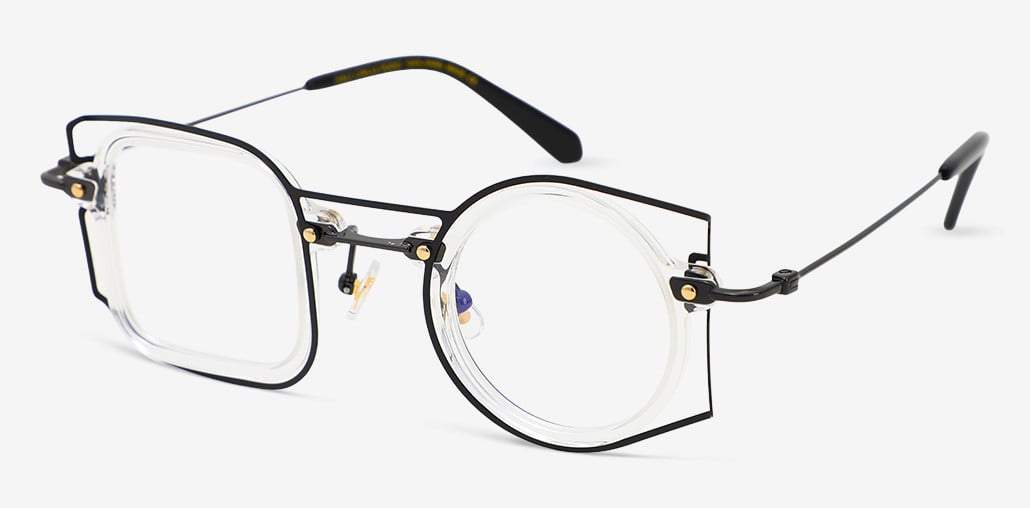
Each of those questions has a mechanical answer. The first is about design: which details your brain links to protective eyewear. The second and third are about optics: how a transparent material handles light. Get both right and a clear frame reads as a deliberate choice, not a placeholder.
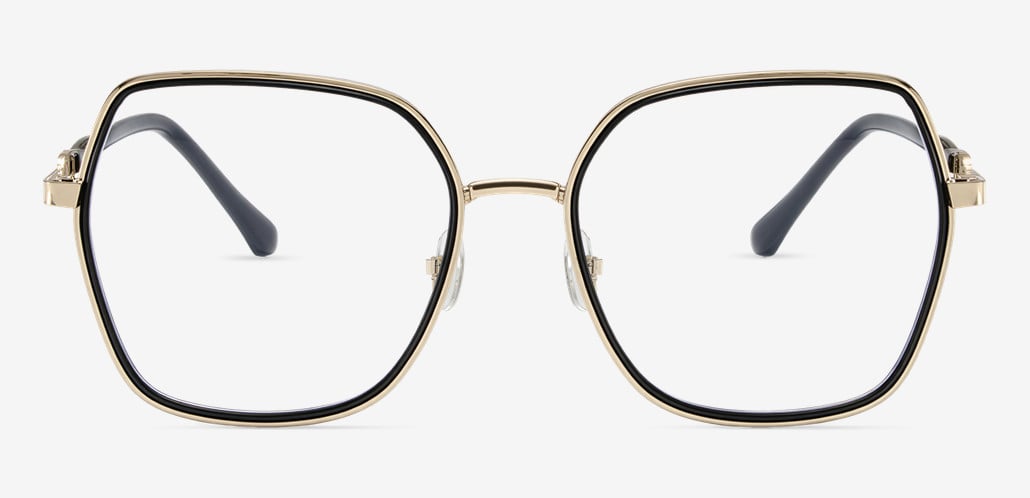
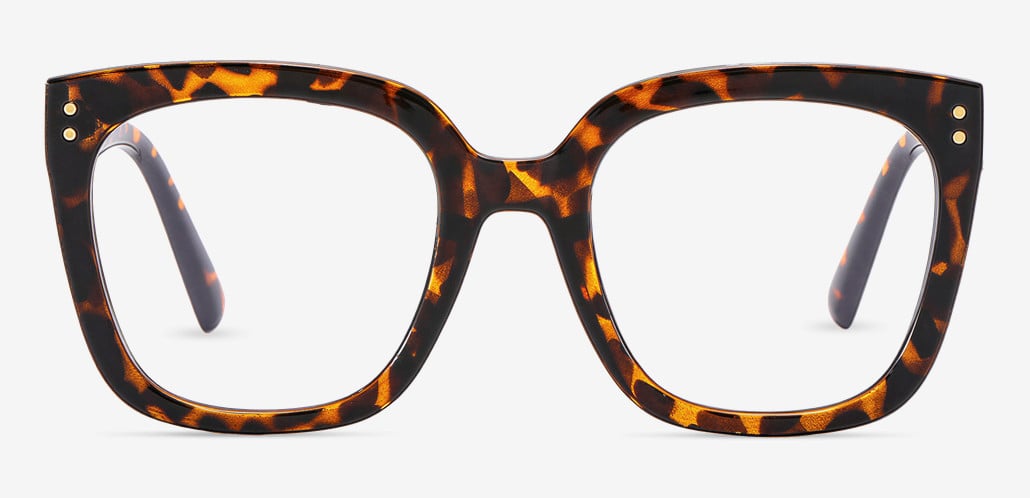
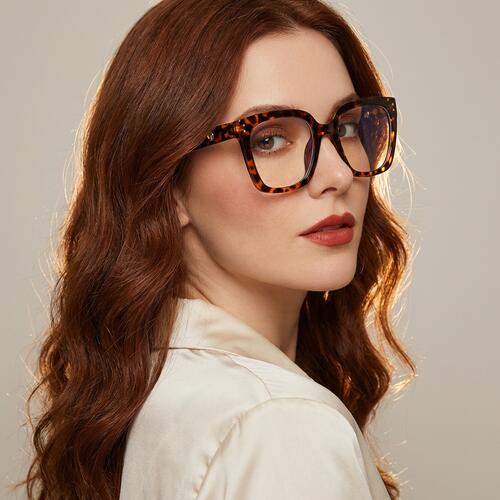
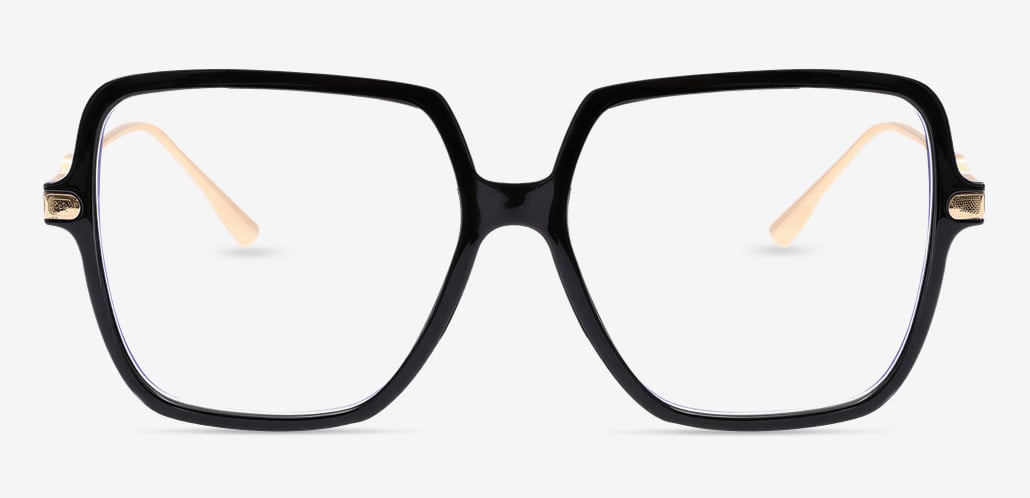
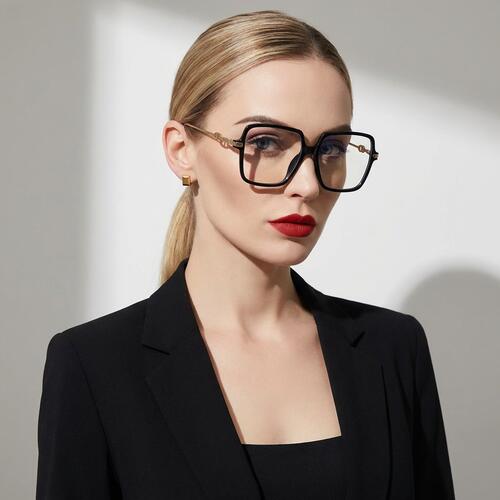
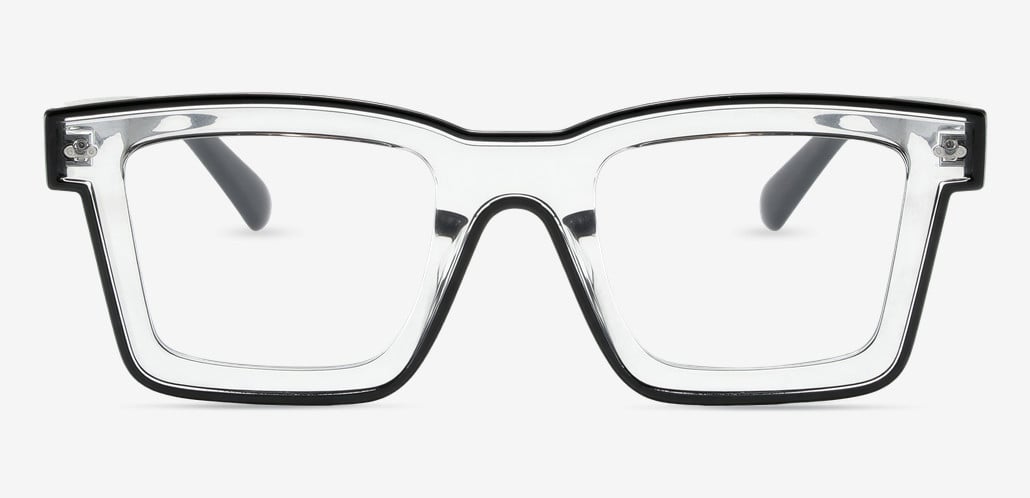
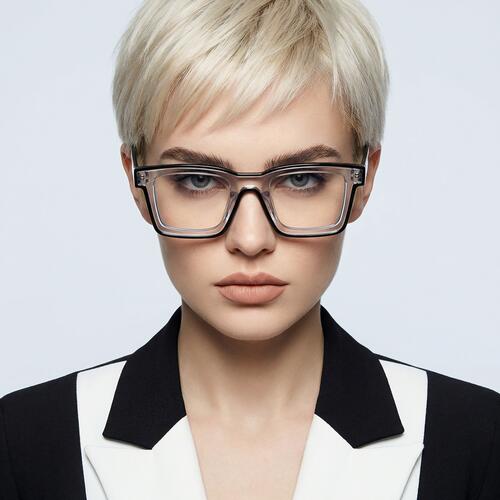
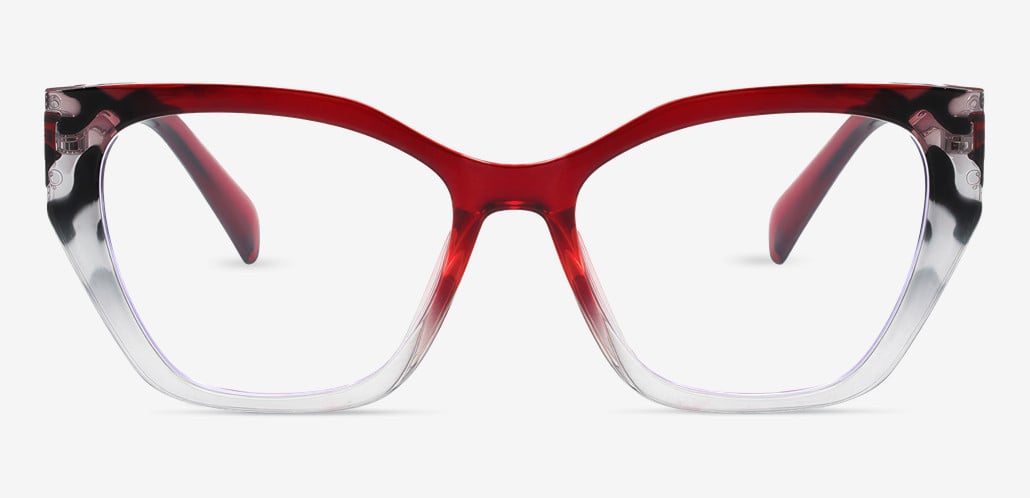
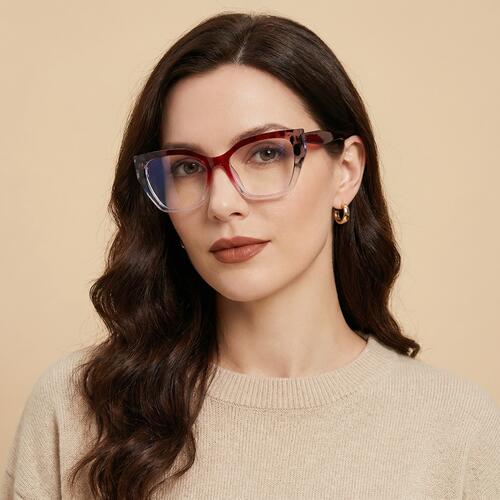
Clear glasses for men at Aoolia come in square, rectangle, round, aviator, browline and geometric shapes, so you can check everything below against real frames while you read.
Why clear frames get mistaken for safety glasses
For a lot of American men, the first clear plastic glasses they ever wore were protective: shop class, chemistry lab, the hardware store, a weekend with a string trimmer. Those frames are designed for coverage and impact resistance, not for looks. They tend to be molded in one piece, curved around the face, and made with even, uniform walls.
That leaves a strong mental template. When a fashion frame shares enough of its features, people's eyes file it in the same drawer, often before they've registered the shape at all. Being clear isn't what causes it. A specific mix of details does, and you can spot every one of them in a product photo.
The Safety-Glasses Line: six details that decide it
Think of each detail as a slider. One end pushes a clear frame toward protective eyewear; the other pulls it back toward real eyewear. Here's what each end looks like and where to check it.
1Front curve
Reads as safety glasses
The front wraps back toward the temples to cover the sides of the eyes.
Reads as eyewear
The front sits mostly flat across the face, with only a gentle curve.
Check the angled or top-down photo. If the lenses sweep sharply backward, the frame is wrapping.
2Wall thickness
Reads as safety glasses
The same thickness all the way around, as if it came out of one mold.
Reads as eyewear
Thickness changes: fuller at the top or corners, slimmer along the bottom, with shaped or beveled edges.
Look at the outer corners. A visible change in thickness there is one of the strongest eyewear signals a clear frame can send.
3Hinges and hardware
Reads as safety glasses
The temples snap or mold into the front, with no metal in sight.
Reads as eyewear
A metal hinge shows through the clear plastic, or pins and rivets dot the front corners.
This is the detail clear frames are best at, because you can see straight through to the hardware. Zoom in on the hinge area.
4Temples
Reads as safety glasses
Flat, straight "paddle" arms that stay the same width from hinge to ear.
Reads as eyewear
Arms that taper from the hinge toward the ear, or have some shaping along the way.
Use the side-view photo. Temples matter more than you'd think, because they're what people see from the side across a table.
5Surface finish
Reads as safety glasses
A dull, slightly hazy surface that looks straight out of the mold.
Reads as eyewear
Either glassy and polished, or an even, deliberate matte that looks chosen rather than left over.
In close-ups, check whether the finish looks uniform and intentional across the whole front.
6Top line
Reads as safety glasses
A thick, straight bar running across the top of both lenses like a brow guard.
Reads as eyewear
A top edge that follows each lens, with corners and a bridge you could describe.
Front photo. If you can't tell where one lens ends and the bridge begins, the top line is acting like a guard.
Two more features settle it on their own. Side shields mean the frame is built for protection, and a "Z87" stamp on the frame means it literally is safety eyewear.
How to read your count
Go through the six details and count how many land on the safety-glasses side.
If you actually need protection
Everyday eyeglass frames, clear or not, aren't designed or rated as protective eyewear. For mowing, power tools, grinding or job-site work, wear eyewear marked "Z87" (or "Z87+" for high impact) under the ANSI/ISEA Z87.1 standard. Safety eyewear can also be made with vision lenses; ask your safety-eyewear supplier.
Clear glasses for men are much faster to sort once you know these six details. The front photo shows the top line and wall thickness; the side photo shows the temples and hinge. That's usually enough to rule a frame in or out in a few seconds.
The Light Map: why a clear frame is never invisible
The second surprise with clear glasses for men is how visible they turn out to be. Men often buy them expecting the frame to disappear, then notice bright lines tracing the rim in every mirror. That's not a defect. It's how transparent plastic behaves, and once you understand it, you can choose how much of it you want.
Here's what those numbers mean on your face. Light that enters a clear frame and meets an inner surface at a steep enough angle can't get out. It bounces back inside, again and again. That's total internal reflection, the same effect that carries light down a fiber-optic cable. The trapped light finally escapes wherever the surface changes angle: outer edges, corners, bevels, the hinge block, and any scratch.
People don't really see a clear frame as a solid shape. They see a set of bright lines where trapped light escapes.
What controls the glow
- Thickness. A thicker front has more room to trap light and taller edges to release it, so the outline is brighter and wider. A slim front draws a fine line.
- Edge shape. Polished bevels and facets release light in bright points, which reads as sparkle. Rounded edges spread it into a soft continuous line.
- Surface finish. Matte or frosted clear scatters light at the surface before much of it can be trapped. Instead of flashing edges, the whole frame glows faintly. It reads softer and quieter, more like a material than like glass.
- Scratches. Every scratch is a new edge for light to escape from, which is why scuffs on clear plastic show up as bright hairlines. A case pays for itself here.
Where the glow lands: four light setups
The outlines aren't fixed. They move with the light. Think about where you spend most of your waking hours, and you'll know which part of the frame people notice most.
Light from above
The office
Ceiling panels light up the top rim, which then works like a thin, bright brow line. Want it subtle? Choose a slimmer top rim or a matte finish. Want definition? A fuller, polished top rim gives it to you.
Strong light, high angle
Outside at midday
Same direction as the office, only much brighter. Faceted fronts throw off small sparkles as you move your head. Matte clear stays calm, which helps if you'd rather people notice your face than your frame.
Light from one side
Window desk or lamp
The side facing the light glows and the other side goes nearly transparent, so the frame can look lopsided in a mirror. That's the light, not the fit. Rounded edges and matte finishes make the difference less obvious.
Small, warm points
Restaurants and bars
Dim, warm downlights make most of the frame disappear while polished corners and bevels twinkle. If evenings out are a big part of your week, this is where glossy clear looks its best.
The Ceiling-Light Check
You can see all of this at home in about a minute, even if you don't own clear glasses yet. A clear phone case or a plastic ruler behaves the same way.
- Stand under a ceiling light and hold the clear item at arm's length.
- Tilt it slowly and watch where bright lines appear: edges, corners, any bevel.
- If it's a frame, put it on and look in a mirror under the same light. Those lines are the first thing other people see.
- Decide what you want more or less of. Too much line? Go thinner or matte. Not enough presence? Go thicker and polished.
One honest note on previews. A camera try-on is the right tool for shape, size and where the frame sits on your face. How a particular frame catches the light in your own rooms is easier to predict with the rules above. So use try-on for the shape and this section for the finish.

Putting it together: a four-step pick
- Shape and size first. Try on three or four shapes and keep the one that sits right. Don't let finish distract you yet.
- Run the Safety-Glasses Line. Check the front, side and angled photos for the six details. Keep frames that score 0–1 and look closer at any 2.
- Match the finish to your main light. Mostly under office lights: think hard about the top rim. Evenings out: glossy pays off. Mixed or side-lit days: matte is the safer bet.
- Set the volume with thickness. Thick clear means defined, outlined and noticeable. Thin clear means barely there.
Three things a clear frame won't do
- It won't stand in for safety eyewear. If the task calls for protection, reach for a Z87-marked pair.
- It won't hide wear. Scratches catch light as bright lines, so storage matters more than it does with dark frames.
- It won't look the same in every room. The glow follows the light. That's part of the appeal, but expect it.
FAQ: clear glasses for men
Do clear glasses make men look like they're wearing safety glasses?
Only when the frame shares safety-eyewear details: a wrapped front, uniform wall thickness, hidden hinges, flat paddle temples, a hazy finish or a straight brow-bar top. A flatter front with varied thickness, visible metal hinges and tapered temples reads as everyday eyewear.
Are clear glasses noticeable on men?
More than most people expect. Clear plastic traps light and releases it at edges and corners, so the frame shows up as bright outlines, especially under overhead lights. Thick, polished frames are the most visible; slim or matte frames are the least.
Should I get matte or glossy clear frames?
Glossy clear looks glassy and outlines itself with bright edges. Matte (frosted) clear spreads light across the surface for a softer, quieter look. Choose glossy for definition, and matte if you want the frame to stay in the background.
Can I wear clear fashion frames for yard work or power tools?
No. Fashion frames aren't rated for impact. Wear eyewear marked "Z87" under ANSI/ISEA Z87.1, or "Z87+" for high-impact protection.
Do thick clear frames look bold?
They look defined rather than heavy. On a clear frame, extra thickness shows up as brighter, wider edge lines instead of a dark block of color.
Why do my clear glasses look different at home than at work?
Light direction. Ceiling lights brighten the top rim, a window to one side makes half the frame glow, and small warm lights make the corners twinkle.
Ready to compare frames?
Clear glasses for men at Aoolia can be filtered by shape, material and size, and you can try frames on with your phone or laptop camera before you choose lenses. Use try-on for the shape, the six details for the safety-glasses question, and your everyday lighting to pick the finish.
How we put this guide together. This guide draws on how clear frame materials handle light (refractive index, surface reflection and total internal reflection), on how protective eyewear is designed and marked in the US, and on the questions shoppers commonly raise about clear frames. It doesn't rank or endorse specific products.