
Bifocal Lens Glasses: The Line, the Ledge and the Ruler Test
Most trouble with a new bifocal pair comes down to two physical things: where the line sits, and the small step the reading area adds to the lens. You can check both at your kitchen table.
Here is a common story. A new pair of bifocal lens glasses arrives, the distance looks fine, and the reading area feels like it's in the wrong place. The usual reaction is "my Rx must be off." Often the Rx is fine. The power is right, but the reading area sits a few millimeters too high, too low or too far out, or the frame sits crooked and carries the line with it.
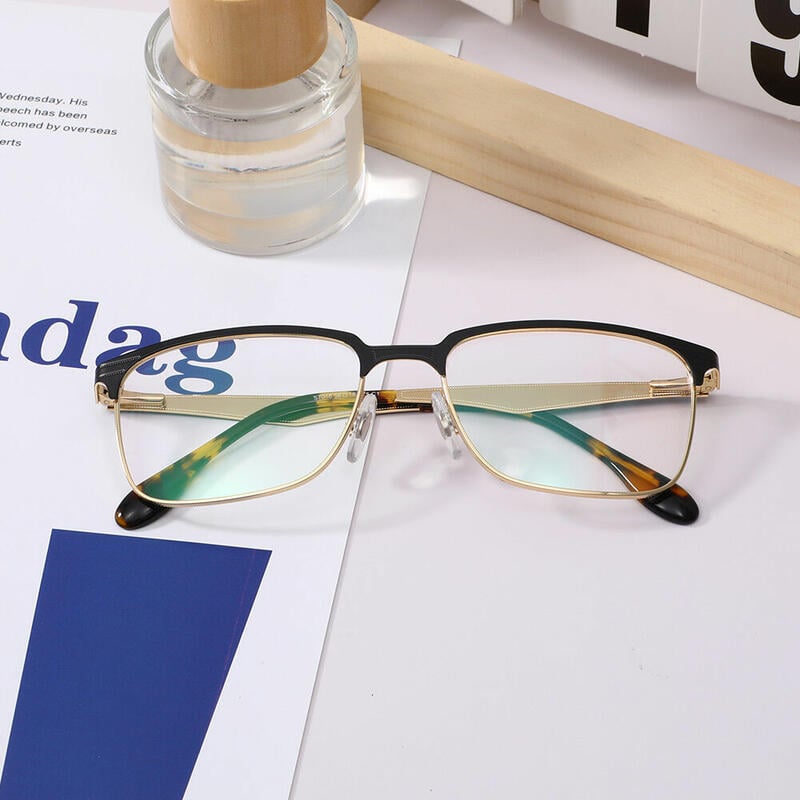
A lined bifocal is one of the few eyewear items you can check with a ruler, a mirror and a fingertip. This guide covers what to record before you order, what to measure when the pair arrives, and how to live with the ledge, the part of the lens most guides skip.
Where the line is supposed to sit
Three placements decide whether bifocal lens glasses feel right. Your Rx card covers none of them. They come from your face and the frame.
Height. For flat-top bifocals the top edge of the reading area is usually set at your lower eyelid. Looking straight ahead, you see over it. Dropping your eyes, you land in it.
Inset. Your eyes turn inward when you read, so each reading area sits a little closer to your nose than the center of the distance zone. In a typical example worked out in lens design literature, that inward shift comes to about 2 mm per lens.
Width. The flat-top's size is named by its width. FT-28 means 28 mm wide, and FT-35 is wider. The width doesn't move, but a shallow lens can trim the bottom of the D.
Height and inset depend on the frame you picked and how it sits on your face. That's why the same bifocal lens can feel perfect in one frame and odd in another.
Before you order: the Old-Pair Record
If you've ever owned bifocals that felt right, that pair is the best fitting data you have. Spend five minutes recording it before it goes in a drawer.
Four fields to write down from a pair that worked
The fitter measures from the lowest point of the lens groove inside the rim, a hair deeper than the edge you can see, so your number will run slightly short. That's fine. You want a reference, not a lab spec.
Here's what those fields tell you. Fitting guides used to train eyewear professionals note that someone who stands tall with their head up is usually fitted lower, and someone who reads with the chin dropped is fitted higher. Taller wearers tend to get lower lines because they look down more. If your old pair felt right and you still read the same way, your new line should land in about the same place relative to your lower lid.

The millimeter number only carries over if the new frame sits on your face like the old one. If the new frame rides higher on your nose, the same 18 mm line will sit higher on your eye. If the order form has a segment height field, enter it. If not, the Record still helps: pick a frame that sits on your face the way the old one did, and compare the new line against it when the pair arrives.
When they arrive: the Two-Ruler Test
A new pair can feel off for two very different reasons. Either the lenses were made with the line in the wrong spot, or the lenses are fine and the frame is bent, tilted or slipping. The first means a remake. The second is often a two-minute adjustment. This test separates them.
Four checks, in this order
Open the temples and set the glasses upside down on a flat table, resting on the top of the rims and the tips of the temples. If one temple tip floats, the frame is twisted or a temple is bent. Note it and keep going.
Measure each line from the lowest point of its own lens. Compare left and right. The US lens standard allows them to differ by no more than 1.0 mm, and each must land within 1.0 mm of the height that was ordered.
Put them on, stand naturally and look at your own eyes. Each line should sit near your lower lid, and both should sit at the same height on your face.
Hold a page of small print where you normally read. Cover your left eye and read. Then switch. Each eye should find a clear reading area straight down. You shouldn't need to slide the page or turn your head sideways.
Now read the results together. This is where the second ruler comes in: the ruler on the table measures the lenses, and the mirror measures the fit.
- Lines equal on the table, uneven on your face. The frame is tilted, usually one temple sitting higher.
- Both lines too high or too low on your face, and the frame slides or rides oddly.
- A temple tip floated in the table check.
- Everything measures and sits right, but you keep noticing the line.
- Reading works, but you still reach for the old pair out of habit.
- Lines differ by more than about 1 mm on the table.
- The frame sits level and steady, yet both lines are clearly off your lower lids.
- One eye has to hunt sideways for its reading area in the inset check.
The "adjust" column catches more cases than people expect. Uneven temples alone can make one lens sit higher than the other, and a frame that slips lowers the line with it. That's why fitting guides say to check the frame before deciding on a remake. Metal frames with adjustable nose pads are the easiest to fine-tune. With acetate, the temples usually need gentle heat to reshape, so it's a job for a local eyewear shop rather than a hair dryer.
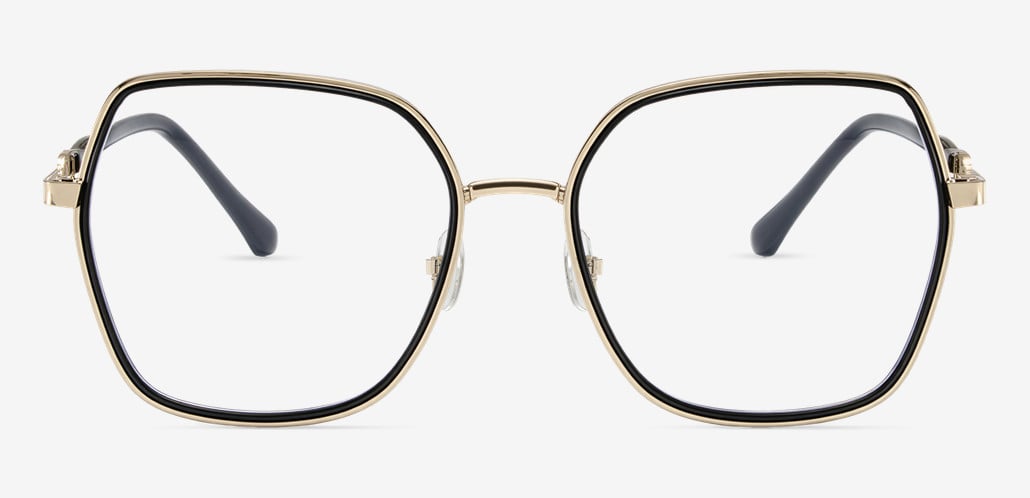
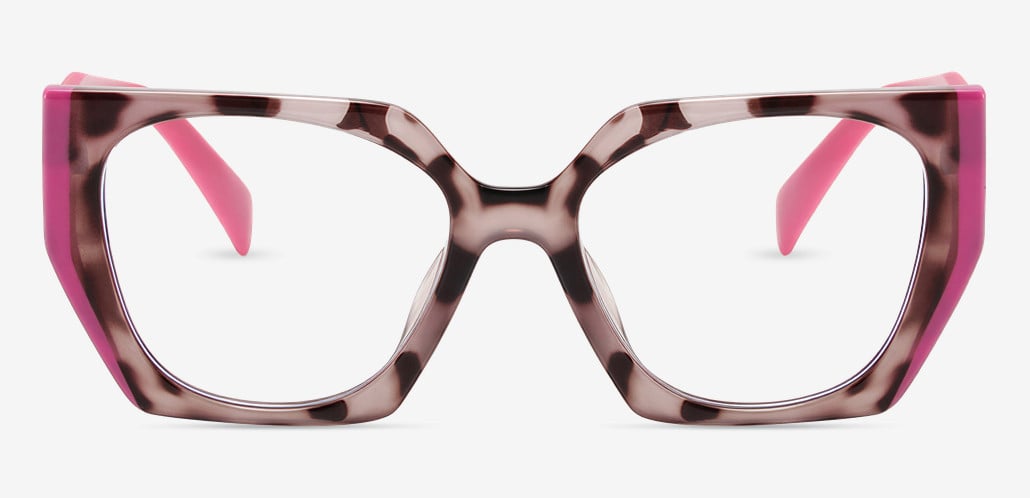
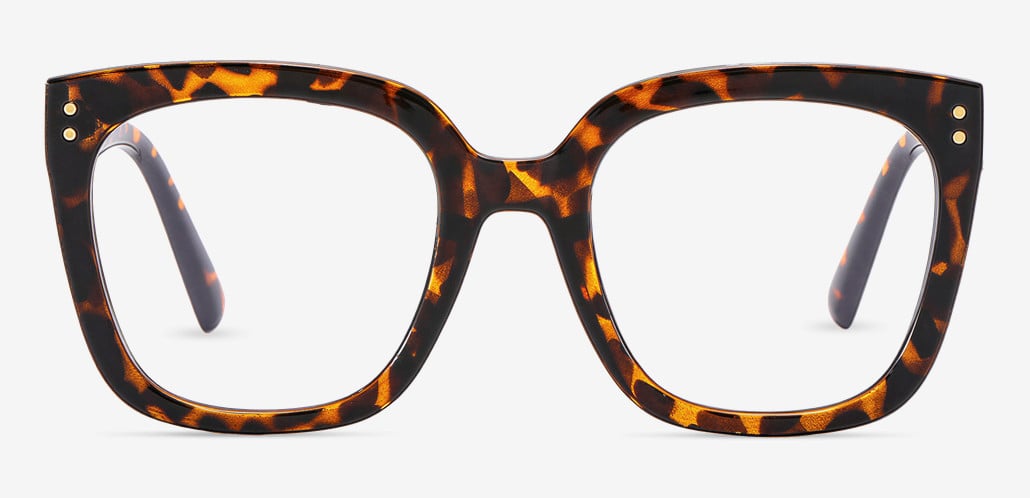
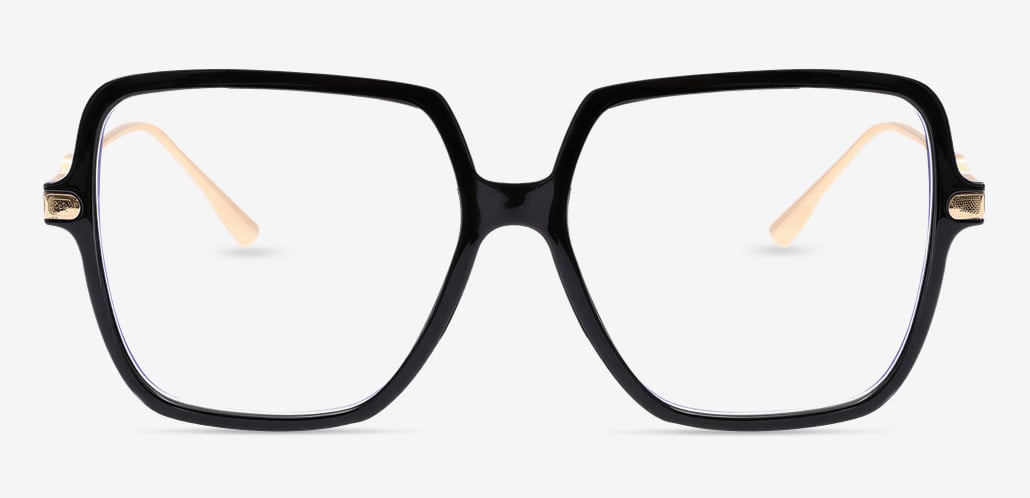
Shopping for your next pair? Frames with a taller lens and adjustable nose pads give the line more room and give you more ways to fine-tune it. Start with our guide to bifocal lens glasses, then use Try On to see where the frame rides on your face before you choose lenses.
Living with the ledge
Run a fingertip lightly across the front of most plastic flat-top lenses and you'll feel a small step along the top of the reading area. That's the ledge. Plastic bifocals are usually made as one piece, and the extra reading power comes from a change in surface curve. That change is what you feel. Older fused glass bifocals put a higher-index glass in the segment instead, so their surface stays smooth.
The ledge explains several everyday annoyances that have nothing to do with fit.
Dust, skin oil and lens-cleaner residue settle in the step, and that gray line along the segment top is usually dirt. Rinse under lukewarm water first so the grit floats out, then wipe along the line with a clean microfiber cloth, not across it. Never scrape the step with a fingernail.
Other people rarely see the reading area itself. They see the edge flash when it catches overhead light or a camera. An anti-reflective coating cuts those reflections and makes the line less obvious.
A stronger reading power needs a bigger change in curve. On executive lenses, where the line runs edge to edge, the ledge grows thicker as the add power goes up. Typical US bifocal wearers have adds around +2.25 to +2.50, where the line is easier to notice.
On light-reactive lenses, the coating can vary in thickness along the segment line. When the lenses darken, that can show as uneven tint or a pale edge, less with low adds and more with high ones. It's a property of the lens, not a defect in your pair.
A prominent ledge is more exposed to knocks and more likely to chip or collect debris. Store bifocal lens glasses lenses-up in a case, not loose in a bag where the step meets keys.
On most molded plastic flat-tops the step is on the front surface. That's the side others look at and the side you clean most, so it's worth a gentle routine.
If the line itself is the deal-breaker
Sometimes the fit is right, the lenses are clean, and the visible line still bothers you. That's a lens-design question, not a fit problem, and there are a few routes.
Blended round. A round reading area with its edge polished out, so it's harder to spot. The blended ring isn't a clear viewing area, which is why fitters usually set blended segments about 1 mm higher.
Digitally surfaced flat-tops. Some lens makers now grind a flat-top style reading area into the lens surface so no line shows from the outside, aimed at long-time flat-top wearers who like how a flat-top reads but not how it looks.
No-line multifocal designs. These change power gradually instead of in one step. They behave differently from bifocals, including how wide the reading area feels, so treat them as a different product rather than a bifocal with the line removed.
Bifocal lens glasses: quick answers
Can I adjust bifocal lens glasses at home?
Small tweaks, yes. Metal nose-pad arms can be nudged evenly to raise or lower the whole frame. A temple that sits high on one side can be bent slightly to level the front. Acetate frames need warmth to reshape safely, and a local eyewear shop can do it with the right tools. Re-run the mirror check after any adjustment.
How high should the bifocal line be from the bottom of the lens?
There's no single number, because it depends on the frame and on where your lower lid falls inside it. What matters is the line sitting near your lower lid. One limit to know: the D of a standard 28 mm flat-top is 19 mm tall, so a line set much lower than that inside the lens will trim the bottom of the reading area.
Why can I feel a ridge on my bifocal lenses?
That ridge is the ledge. On one-piece plastic bifocals the reading power comes from a steeper curve in that area, and the step is where the two curves meet. It's normal, and it's also why the line needs gentle cleaning.
Is it normal that the two lines aren't exactly level?
Up to about 1 mm of difference falls within the US lens standard. If the lines measure level on a table but look uneven on your face, the frame is tilted, not the lenses. Level the frame first.
The pair passes every check, but I still see the line. Is something wrong?
Probably not. The line is a physical edge, so you'll notice it when your eyes cross it, especially in the first days. If it still bothers you after steady wear, the options in the section above are the next step, not a remake of the same lens.
Bifocal lens glasses reward a little attention. Write down the old pair before you order, measure the new one before you decide it's wrong, and clean along the line rather than across it. If you're still choosing frames or lens types, our guide to bifocal lens glasses brings the types, terms and frame choices together in one place.