
Rimless care · Getting ready
Women's Rimless Prescription Glasses and Your Beauty Routine
Hairspray, nail polish remover, a curling wand and your favorite perfume all sit within arm's reach of your glasses every morning. Here's what each one does to a drilled lens, and how to get ready without leaving any of it on your lenses.
Most advice about women's rimless prescription glasses stops once you've picked a pair. This guide starts at the bathroom counter, because a rimless pair spends some of its riskiest minutes of the day there.
A full-rim frame wraps each lens in metal or plastic. A rimless frame doesn't. The lens edge is exposed, and in most rimless designs the lens is drilled so the bridge and temples can fasten straight into it. That changes how the lens reacts to the sprays, solvents and heat that are a normal part of getting ready.
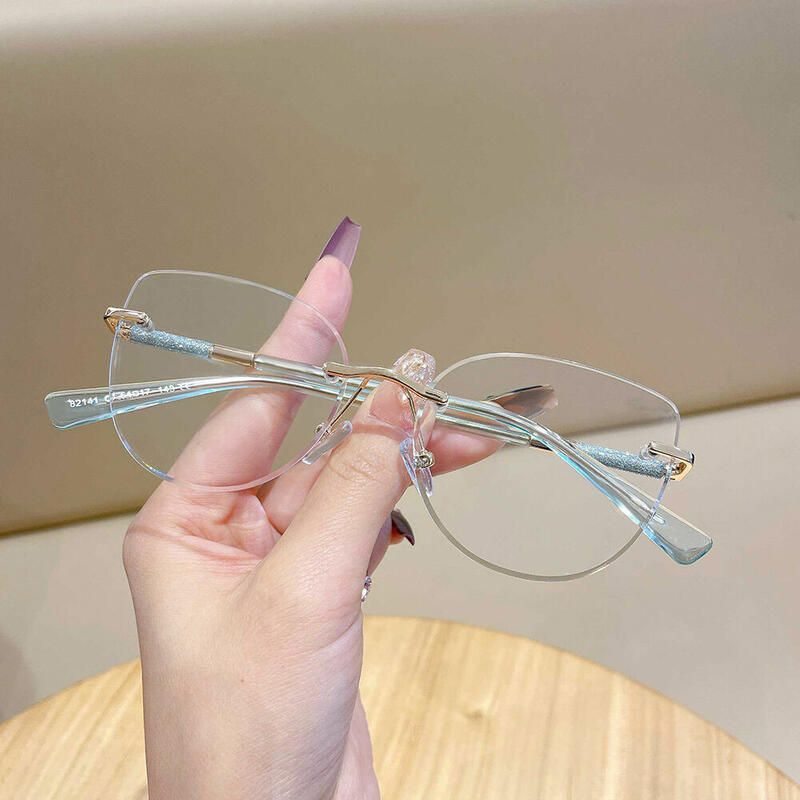
If you're still choosing a frame, browse women's rimless prescription glasses first and come back. If you already wear a pair, read on. Each habit below takes a few seconds, and together they're the difference between lenses that stay clear and lenses that slowly turn hazy around the screws.
Key takeaways
- The weak spot on a rimless lens is the drill hole. Stress concentrates there, so solvents and heat usually do their damage there first.
- Sort your products into three groups: Wipe-Off, Build-Up and Keep-Away. Only the Keep-Away group can permanently damage a lens.
- Take your glasses off for anything that sprays. Put them back on only after fragrance, hand sanitizer and setting spray have dried.
- Keep hot tools and nail polish remover out of the space where your glasses sit, even if you're only putting them down for a minute.
- If a haze is still there after a soap-and-water wash, it isn't dirt. Where it starts tells you whether it's coating damage or a crack.
Why Rimless Lenses React Differently
A rimless lens does two jobs: it corrects your vision, and it holds the frame together. The bridge and temples attach at small mounting points, usually holes drilled through the lens near your nose and at the outer edges. Every time you put the glasses on, take them off or push them up your nose, those points take the load.

Plastic that is always under a little stress is more vulnerable to chemicals and heat than relaxed plastic. On a full-rim frame, the rim spreads that stress around the whole lens. On a rimless frame it gathers at a few tiny spots. Everything else in this guide follows from one idea:
On a rimless pair, damage starts where the lens is drilled.
A splash of nail polish remover that might only dull the surface of a full-rim lens has a much easier place to start on a rimless lens. Fine cracks can begin at a mount hole and spread outward over the following weeks. The exposed edges and the small seams where the hardware meets the lens also collect residue that a quick wipe never reaches.
The Counter Sort: Three Groups on Your Bathroom Counter
You don't need to read ingredient lists. Sort everything you use in the morning by what it does to a lens, and you'll know how careful each step needs to be.
A cleaning issue
Wipe-Off
What's in it: moisturizer, sunscreen, foundation, concealer, tinted balm, and the natural oils on your hands and face.
What happens: a smear, not damage. The real risk is dry-wiping it around and smudging the nose pads with makeup.
Habit: let skincare and base makeup set before the pads touch your nose. Wash your hands before you handle the lenses.
Builds up over time
Build-Up
What's in it: hairspray, setting spray, dry shampoo, texturizing spray, loose and setting powder.
What happens: a fine layer settles on the lens and packs into the seams around the hardware. Wiping it dry drags grit across the coating.
Habit: take the glasses off and get them out of the spray cloud, ideally in a case or in another room.
Can cause permanent damage
Keep-Away
What's in it: nail polish remover (acetone and non-acetone), fragrance and hand sanitizer while still wet, and hot tools: blow dryer, curling wand, flat iron.
What happens: solvents can attack the lens material, and heat can crack the coating. Both are worst at the drill holes.
Habit: never let your glasses and these products share space at the same time.
Most of what's in the first two groups just means more cleaning. The third group is different. Acetone is well known for attacking polycarbonate, one of the most common lens materials. Non-acetone removers still contain solvents, so treat them the same way. A lens that is already under stress at a mount hole gives any solvent the easiest place to begin.
The Glasses-Off Window: When to Take Them Off and When to Put Them Back On
The order of your routine matters as much as the products. Here's a getting-ready sequence built around your rimless pair. Skip any step you don't do.
- Skincare and sunscreenGlasses off
Give products a few minutes to sink in. Fresh sunscreen on the bridge of your nose transfers straight onto the pads, and from there onto the lenses.
- Base makeupYour call, then wait
Wear them if it helps you blend. Either way, let the base set before the pads go back on, or you'll get two clean stripes down your nose and two dirty pads.
- Eye makeupDepends on your vision
This is the step most people struggle with. See the makeup gap below.
- Blow-dry, hot tools and hair spraysGlasses off and away
This is the longest and riskiest stretch. Heat and spray stay in the air around you, so a pair folded on the counter next to the curling wand isn't safe either. Put them in a case or another room.
- Setting spray and fragranceSpray, dry, then on
Mist travels. Spray first, wait until your skin and the air feel dry, then put your glasses on.
- NailsGlasses on if you need them
If you need your glasses to see your nails, wear them. The danger is your fingers, not the fumes: close the remover, wash your hands, and only then touch your frames.
- Hand sanitizer, any time of dayRub until fully dry
Damp sanitizer on your fingertips is the most common way solvents end up on a lens during the day. It only takes a few seconds of rubbing.
The makeup gap
Nobody warns you about this one: you need your glasses to see your eyes, and you need them off to do your eyes. How big the problem is depends on which way your vision goes.
If you're nearsighted
Up close is usually where you see best. Lean in toward the mirror and your eyes often come into focus without glasses. A lighted mirror helps more than magnification.
If you're farsighted, or your near vision has changed
Up close is exactly where things blur. A lighted magnifying mirror helps many people. So do flip-lens makeup glasses, where one lens swings down so you can work on that eye.
The Stand-In Pair
Don't throw away your previous glasses. If they still let you see well enough to do your makeup and hair, make them your getting-ready pair. They take the hairspray and the powder. Your rimless pair stays in its case until you're done, then goes on clean. It's the easiest habit in this guide, and it protects your new lenses from the riskiest part of the day.
Heat Is the Quiet One
Anti-reflective and other lens coatings are very thin layers bonded to the lens surface. Heat makes the lens and the coating expand by different amounts. Get them hot enough and the coating breaks into a fine web of cracks called crazing. Crazing isn't a smudge, and it doesn't wash off.
A hot tool doesn't have to touch your lenses to cause it. Watch for these spots:
- Wearing your glasses while you blow-dry near your face, or pushing them up onto your head during the blow-out.
- Putting them down next to a curling wand or flat iron that's heating up or cooling down.
- Using a hair dryer to dry or defog your lenses. Let them air-dry or blot them instead.
- Leaving them on a car dashboard or seat in summer, or on the counter by a hot oven door.
The Haze Check: Dirt, Coating Damage or a Crack?
When a rimless lens looks cloudy, wash it first using the routine further down. Then hold it over something dark, like a black T-shirt or your phone's blank screen, under a lamp. What you see tells you what you're dealing with.
It was film. Go back to the Counter Sort and work out which Build-Up product reached your lenses, then change when you take your glasses off.
Product has packed into the seams. Gently clean around each mount with a soft toothbrush you keep only for your glasses, using soapy water. Don't pick at it with a fingernail or anything sharp.
That's crazing in the coating, often from heat. Cleaning won't remove it. If it bothers your vision, the lens needs replacing.
That's a stress crack in the lens, and it can grow. Don't tighten the screws to "fix" it, because more pressure makes it worse. Plan to replace the lens.
Ordering Women's Rimless Prescription Glasses With Your Routine in Mind
The safest time to plan for your beauty routine is before you check out. A few choices make every habit above easier.
- Read the lens materials listed. Trivex is often chosen for drilled frames because it's less likely to crack around mount holes. Polycarbonate is very impact-resistant, but it's one of the materials acetone attacks, so it calls for the strictest Keep-Away habits. Standard plastic lenses are generally considered the least forgiving at drill holes.
- Look at the coatings. A smudge-repellent or water-repellent top coat makes Wipe-Off and Build-Up products easier to clean off. It won't protect against solvents or heat.
- Put a hard case where you get ready. The habit that works is the one that takes two seconds. A case in the bathroom drawer gets used. A case in your bag doesn't.
- Decide on your Stand-In Pair now. When the new pair arrives, the old one moves to the vanity instead of the junk drawer.
When you're comparing frames in our collection of women's rimless prescription glasses, check the lens options listed on each frame's product page before you add lenses. Use Try On to compare outlines while you're at it.
A Cleaning Routine Built for Drilled Lenses
This takes about a minute. It's gentle enough for every day and thorough enough to clear residue out of the seams.
- Rinse under lukewarm water, never hot. Rinsing washes grit away before anything touches the lens.
- Add one drop of plain dish soap (no lotion added) to your fingertips and work it over both sides of each lens and around the hardware.
- Clean the seams with a soft toothbrush you keep only for your glasses, using light pressure around each mount.
- Rinse again until no soap is left, especially around the screws.
- Blot dry with a clean microfiber cloth. Hold the lens you're drying, not the temple, so you don't put pressure on the mounts.
Skip these: paper towels, tissues and shirt hems (they scratch), household glass cleaner (made for windows, not coated lenses), hot water, and the hair dryer. When you're out, use a spray labeled safe for coated lenses and a clean microfiber cloth.
Women's Rimless Prescription Glasses: Beauty Routine FAQ
Can hairspray damage rimless glasses?
Hairspray usually causes build-up, not instant damage. It leaves a sticky film on the lens and in the seams around the hardware, and wiping it dry drags grit across the coating. Take your glasses off and get them out of the room before you spray, and wash off any film with lukewarm water and a drop of dish soap.
Is nail polish remover bad for glasses lenses?
Yes. Acetone is well known for attacking polycarbonate lenses, and non-acetone removers still contain solvents. On rimless glasses the risk is higher, because a drilled lens is already under stress at its mount holes. Close the bottle and wash your hands before you touch your frames.
Can I wear my rimless glasses while using a curling iron or blow dryer?
It's best not to. Heat can make a lens coating craze, a permanent web of fine cracks. A hot tool doesn't have to touch the lens to cause it, so keep your glasses in a case or another room while you style your hair.
How do I do my eye makeup if I can't see without my glasses?
If you're nearsighted, leaning in close to a well-lit mirror often works. If you're farsighted or your near vision has changed, try a lighted magnifying mirror or flip-lens makeup glasses. Many people keep their previous pair as a getting-ready pair, so their current lenses stay out of the spray zone.
What are the tiny cracks near the screws on my rimless glasses?
Fine lines that start at a mount hole and spread outward are usually stress cracks in the lens. They can grow over time. Don't tighten the screws to fix them, because that adds pressure. Replacing the lens is the long-term fix.
How should I clean makeup off my rimless lenses?
Rinse with lukewarm water, use one drop of plain dish soap, clean around each mount with a soft toothbrush, rinse again, and blot dry with a microfiber cloth while holding the lens rather than the temple. Avoid paper towels, household glass cleaner and hot water.
Which lens material is best for drilled rimless frames?
Trivex is often chosen for drilled frames because it's less likely to crack around mount holes. Polycarbonate is very impact-resistant but sensitive to solvents such as acetone. Standard plastic is generally the least forgiving at drill holes. Check which materials are listed for the frame you choose.
Get Ready, Then Put Them On
Getting ready shouldn't cost you a pair of lenses. Sort your counter into Wipe-Off, Build-Up and Keep-Away. Take your glasses off for the long hair-and-spray stretch, and let your Stand-In Pair take the overspray. Those three habits cover most of what goes wrong with rimless lenses between the shower and the front door.
Ready for a pair that fits your routine? Browse women's rimless prescription glasses at Aoolia, compare outlines with Try On, and choose your lenses on the product page.
About this guide: written by the Aoolia Editorial Team. It draws on well-established properties of common lens materials and coatings and on standard lens-care practice. It's general care information, not medical advice. If you notice any change in your vision, talk to your eye doctor.